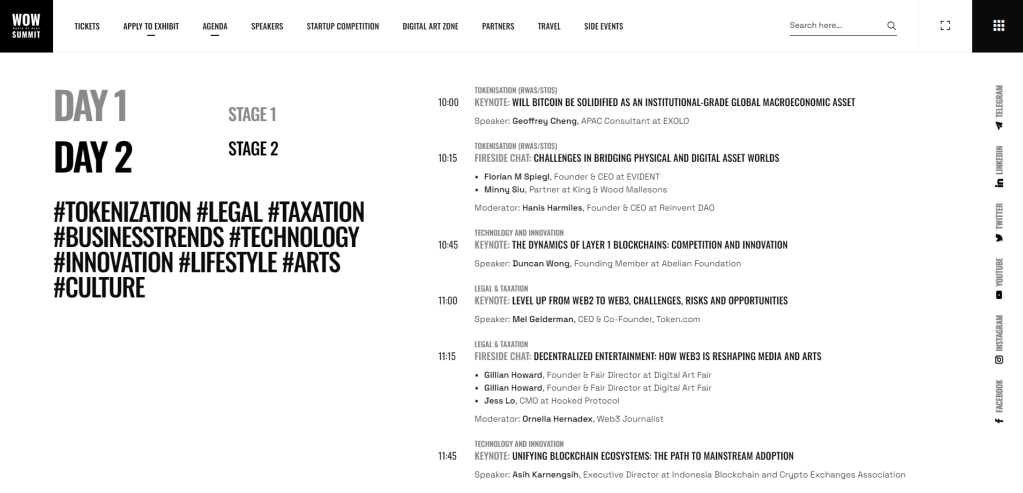
The keynote address is titled “The Future of Bitcoin – Institutionalization as a Global Macroeconomic Asset” – WATCH HERE
In the realm of global finance, few assets have captured the world’s attention quite like Bitcoin. Initially met with scepticism, it has evolved from a fringe concept into a top 10 global asset by market cap.
On March 26-27, join me at AsiaWorld-Expo as we explore Bitcoin’s potential as an institutional-grade global asset.
Use the promo code WOWHK24SPEAKER to access a 20% discount on your ticket. See you there at WOW Summit!
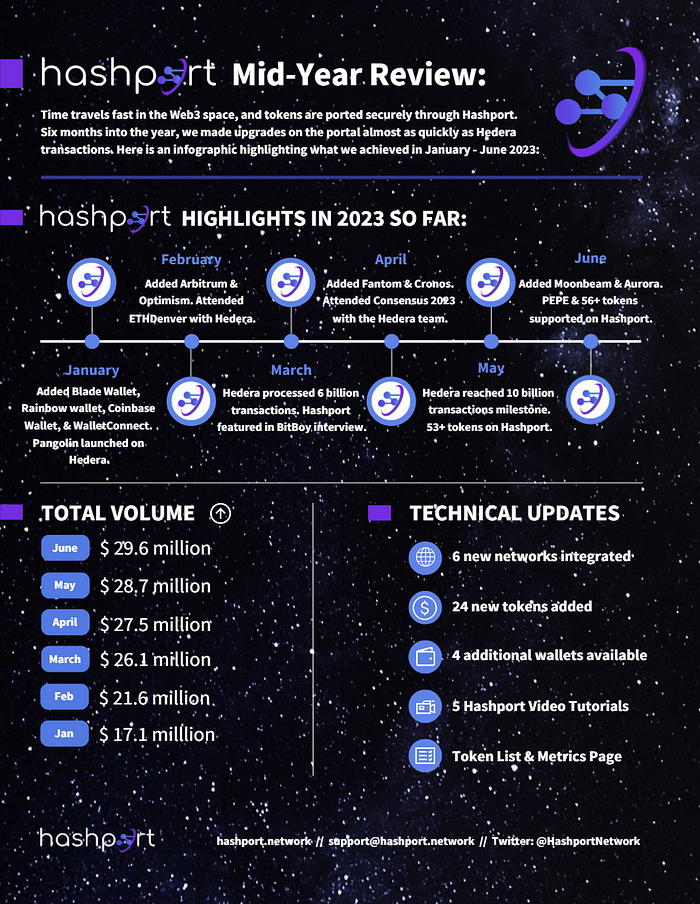
Time travels fast in the Web3 space, and tokens are ported securely through the Hashport bridge. Six months into the year 2023, we made upgrades on the portal almost as quickly as Hedera transactions.
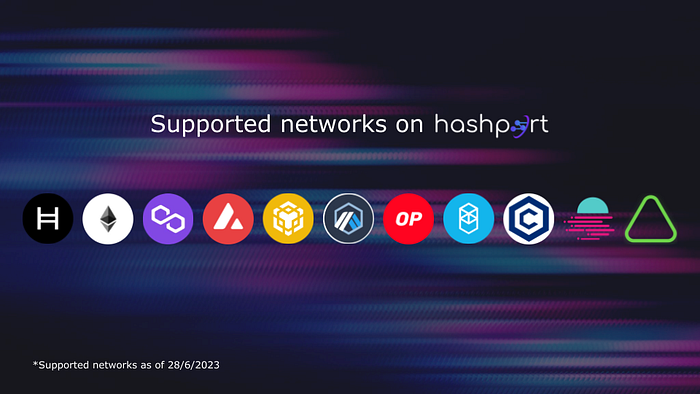
As a public utility and interoperability solution, Hashport serves the Hedera ecosystem and the broader DeFi communities. At the time of writing in July 2023, Hashport supports 11 networks and 57+ tokens. We have many milestones and features to highlight — let’s review what we achieved so far this year.
Supported networks
In the previous 6 months, Hashport integrated an additional six networks, enabling interoperability between the existing supported networks with layer 2 networks Arbitrum and Optimism, Fantom, Cronos, Moonbeam, and Aurora.
All network integrations were voted in by the Hashport Governing Council, and many of them were requested by Hashporters and DeFi players who wished to enter the Hedera ecosystem.
Supported tokens
Along with the addition of the 6 new networks, 24 more tokens were integrated with the portal. Here are the new integrated tokens categorised by networks:
Currently, Hashport supports 57 unique tokens and their cross-network representative tokens. Users can access the Hashport Token List to seamlessly search for any token supported on the portal.
Top Ported Tokens
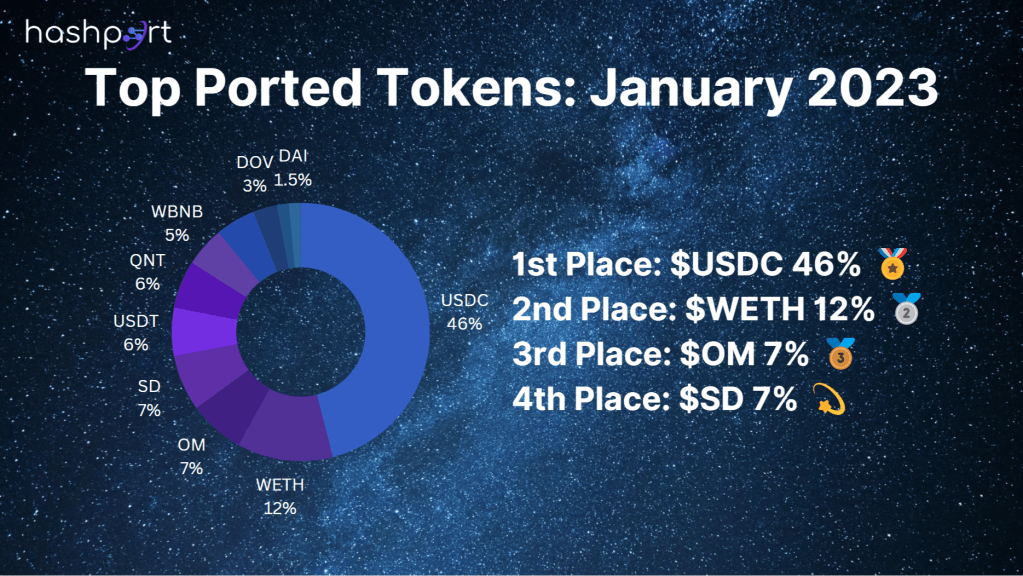
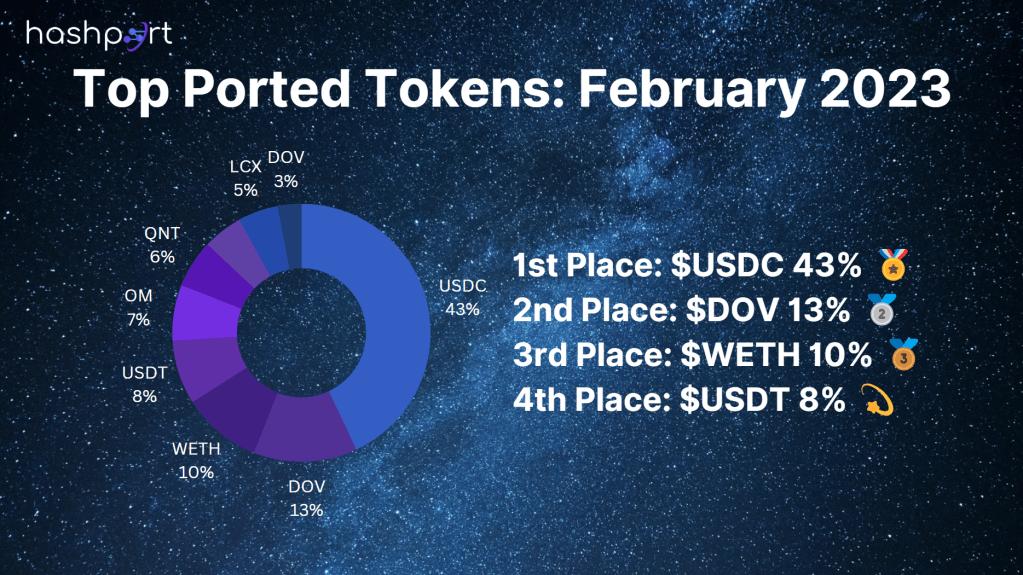
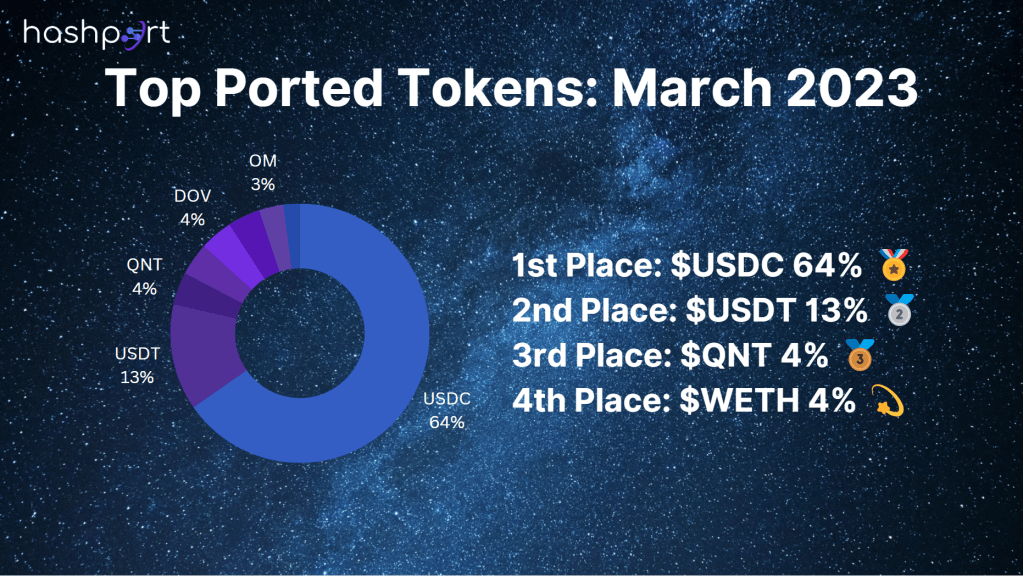
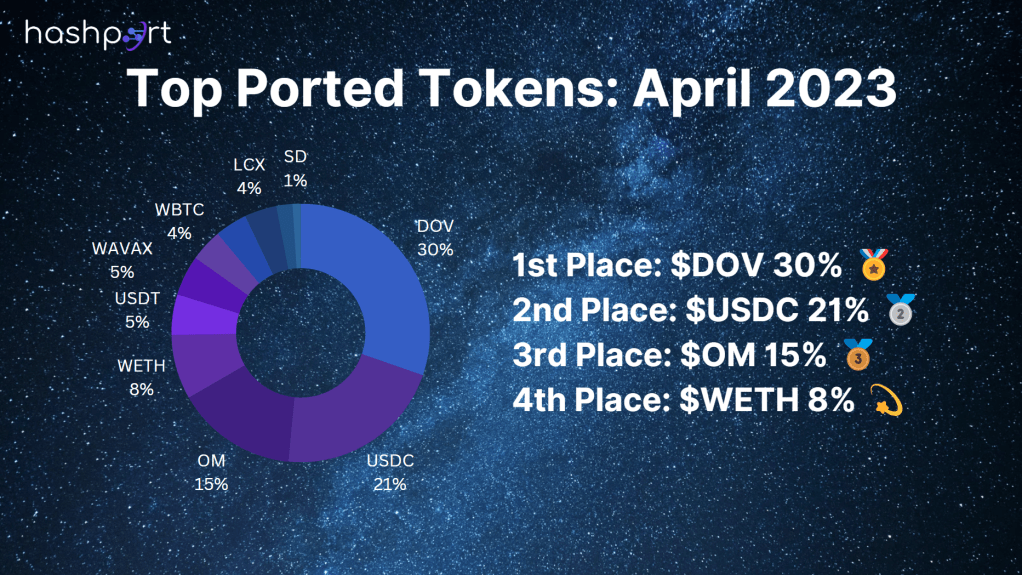
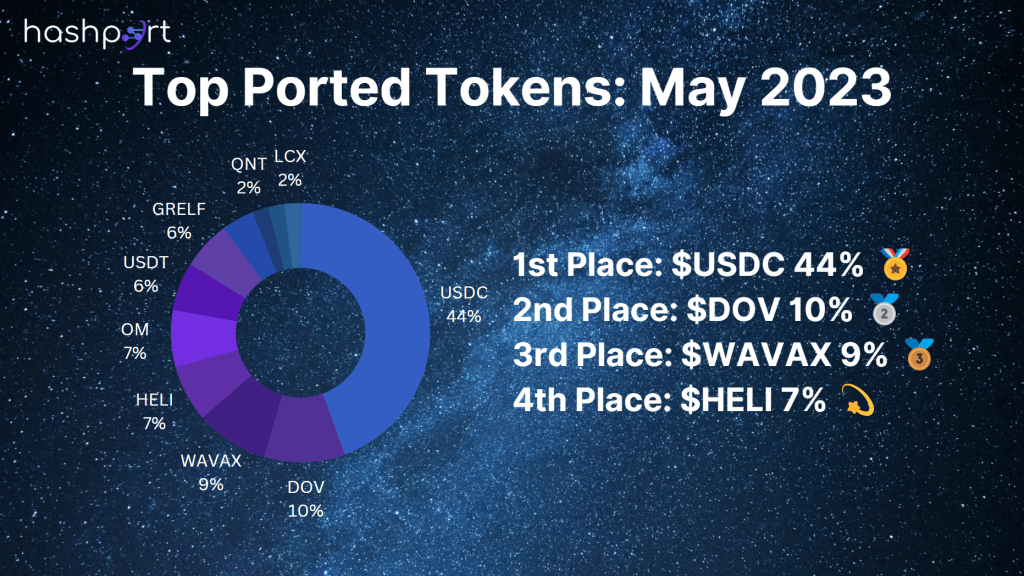
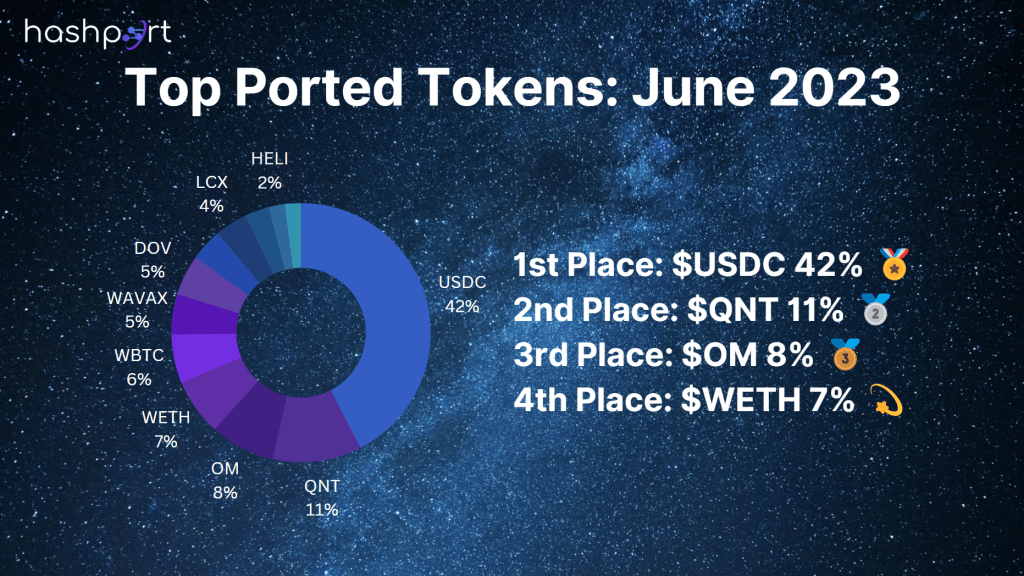
Every Monday, we share a weekly review of Top Ported Tokens to provide a glimpse into which tokens have been popular. For the first time ever, we give Hashporters a sneak peek into the monthly Top Ported Tokens of January — June 2023.
Other than the expected result of stablecoin $USDC being the top ported token, Wrapped ETH, Dovu’s $DOV, MANTRA’s $OM, Quant Network’s $QNT all had moments in the top 3. Tokens such as Wrapped AVAX, $HELI, & $USDT also gained popularity in the past six months.
On the EVM side, we integrated RainbowKit, a React-based library for adding Web3 wallets into dApps. It allows users to connect wallets such as Rainbow, CoinbaseWallet, and WalletConnect. Users can simply scan a QR code on their mobile phone to access Hashport through their favourite wallet.
To learn more about connecting EVM wallets & Hedera accounts to Hashport, watch our video tutorial.
Hashport Tutorial Series
The world of DeFi is constantly changing, and education is crucial for users who are new to Hashport and the Hedera network. We understand that some users prefer watching visual content more than reading blogs, so we published five new video tutorials.
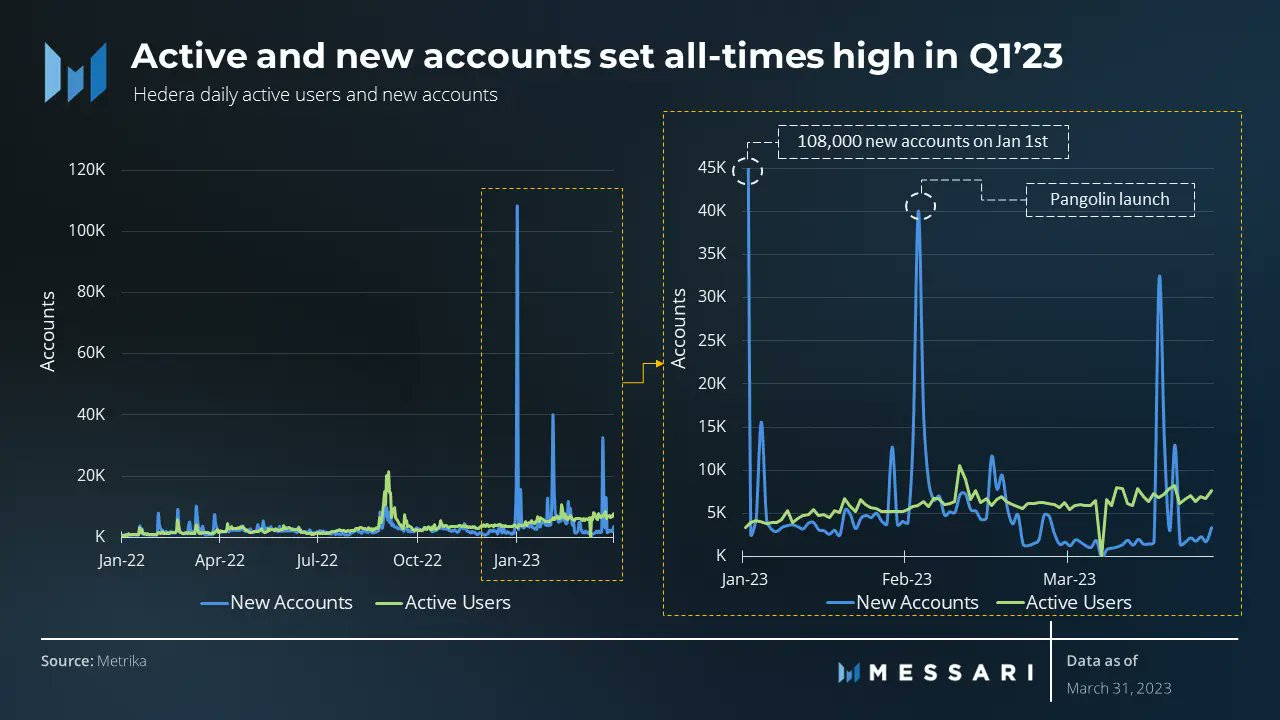
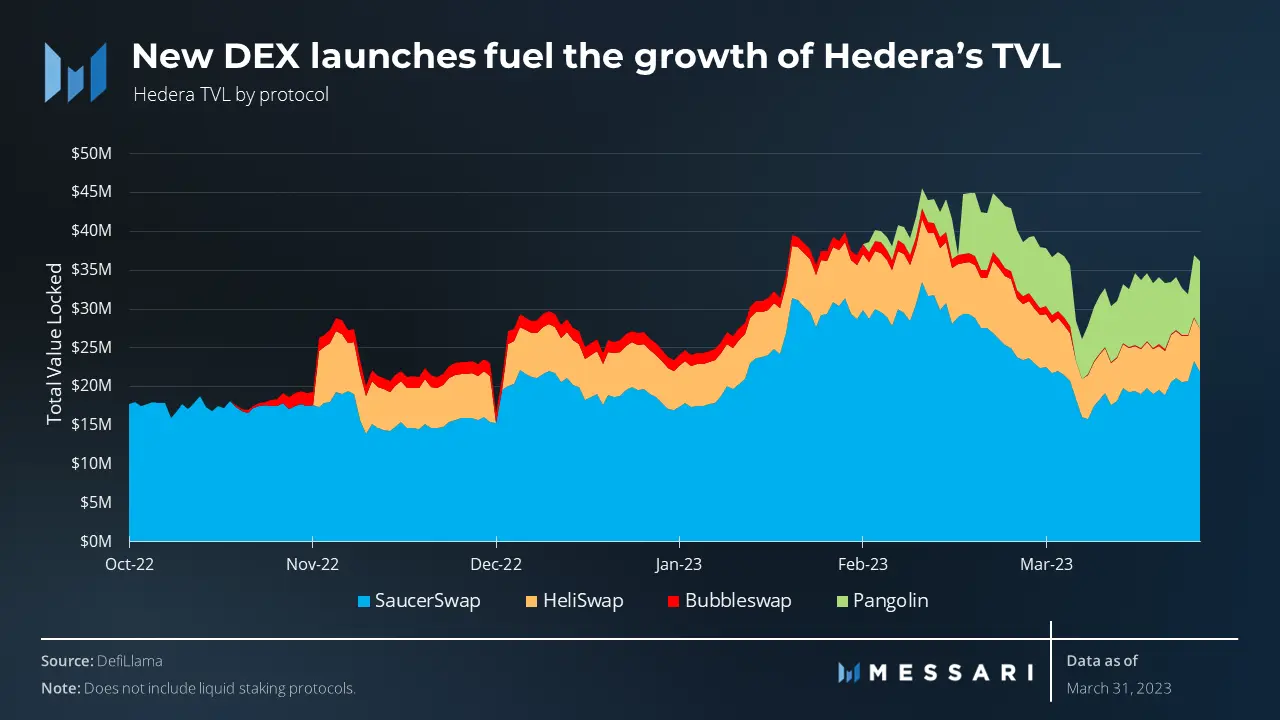
According to Messari’s State of Hedera Q1 2023 report, “all Hedera Network Services saw key metrics rise”. At the time of writing, the Hedera mainnet has processed 10.3 billion transactions since January 2023. Hedera network TVL increased 52% QoQ, and its growth can be attributed to DeFi opportunities that appear on DEXes such as SaucerSwap, HeliSwap, and Bubbleswap.
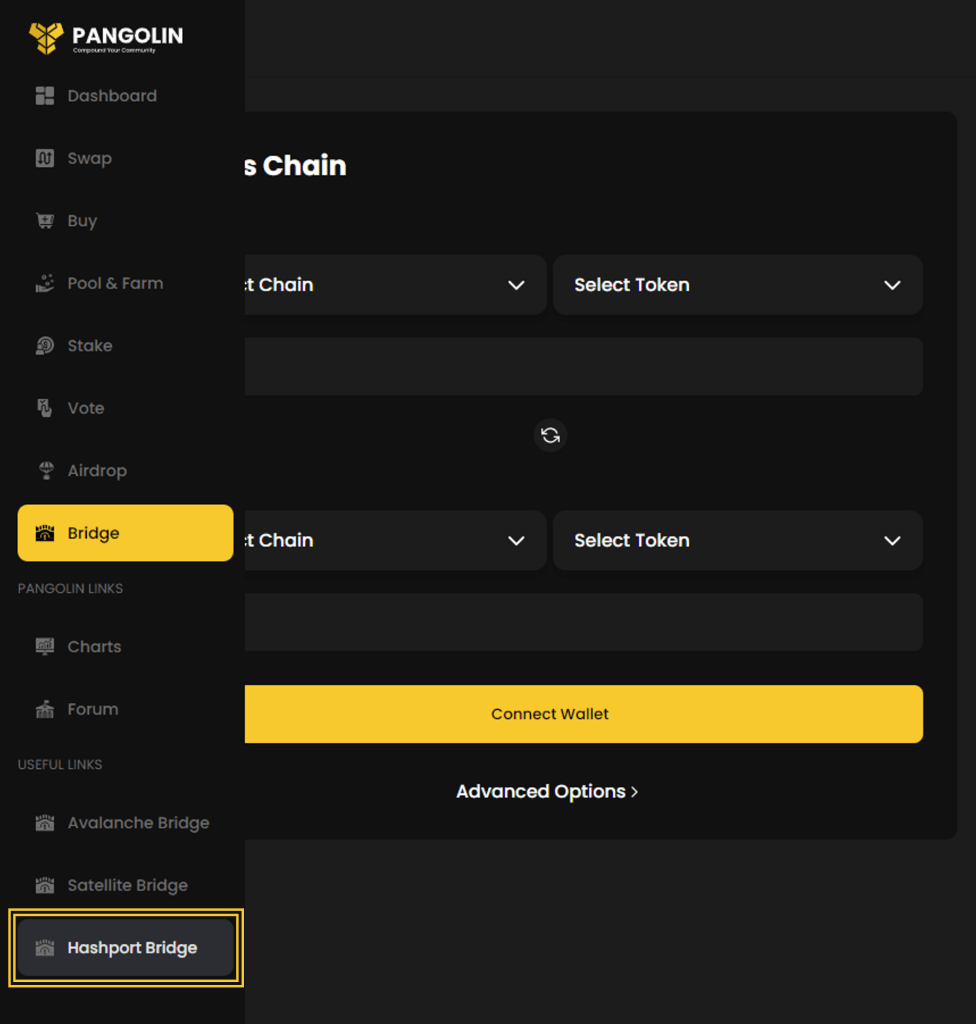
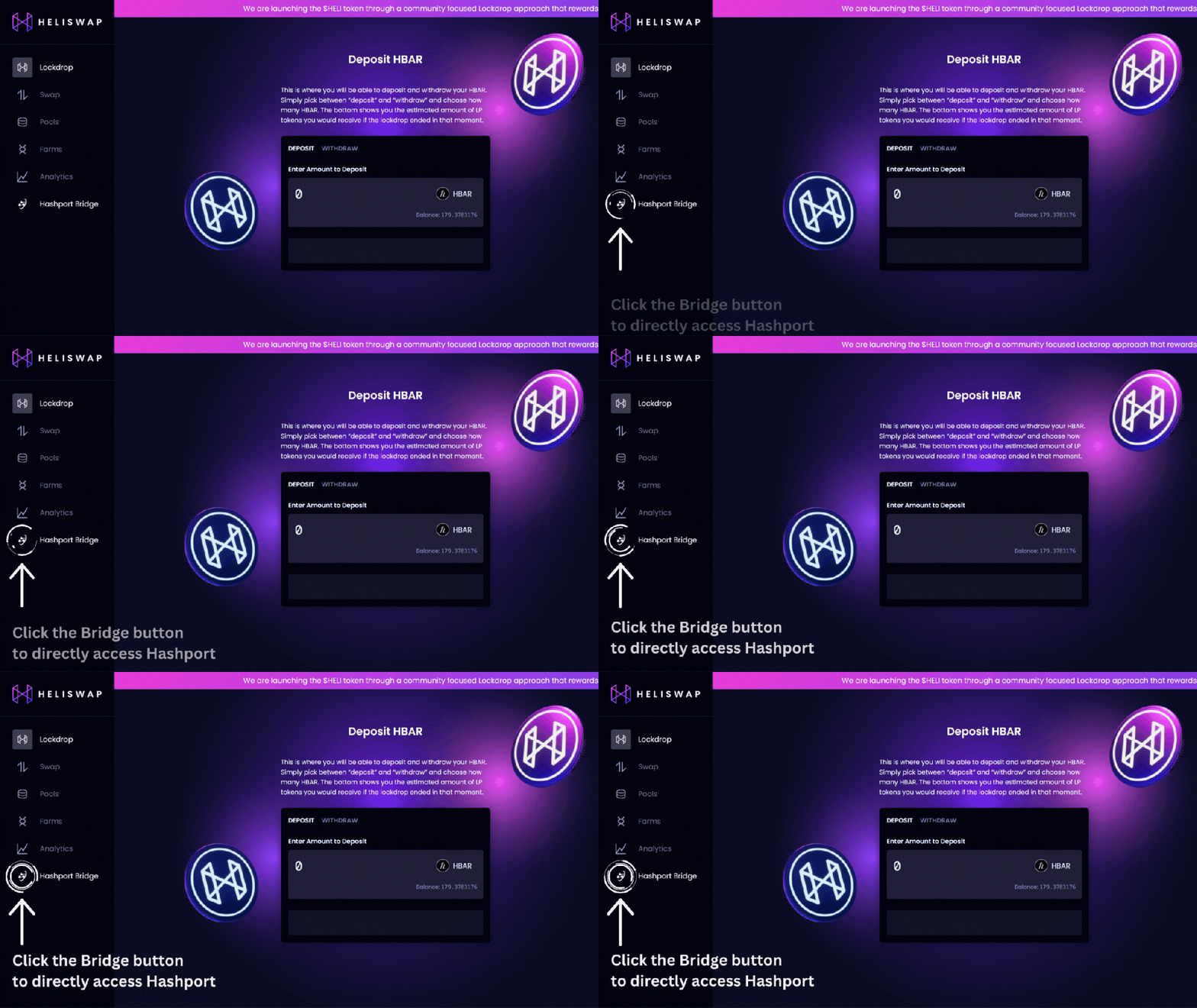
For a seamless user experience, a “Hashport bridge” button is available on these platforms to facilitate a smooth token porting journey.
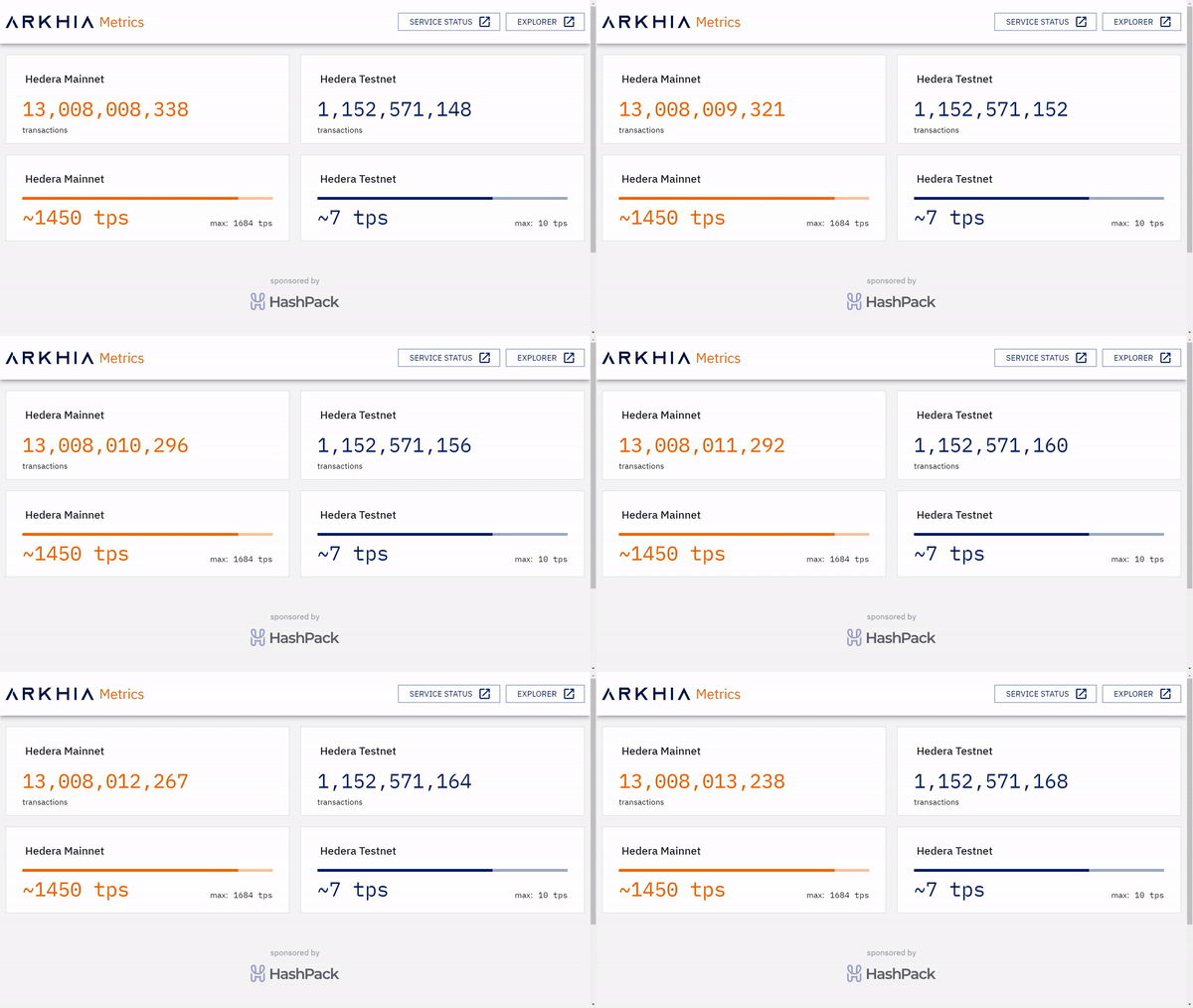
As shown in Metrika’s Hedera network overview, more than 1.5 million Hedera accounts were created in the previous six months. The Arkhia metrics page that launched in Q2 2023 has also been a popular method to view real-time Hedera transactions and TPS.
Metrics page
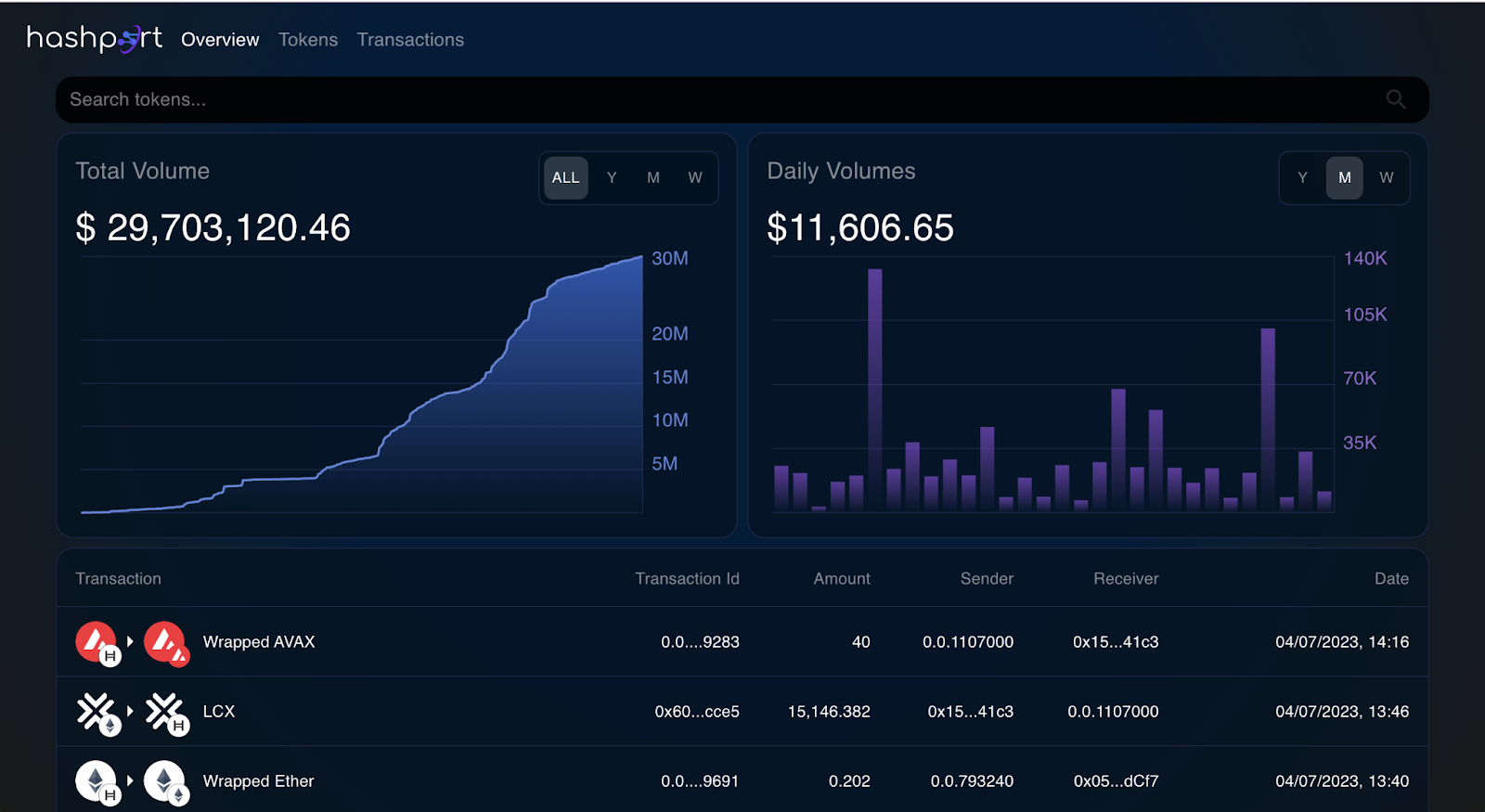
In Q2 2023, we made the Hashport metrics page available to the public. Users can access data on supported tokens, volume & liquidity. Upgraded features also allow users to browse transactions by categories such as sender, date range, token address, & transaction hash.
A video tutorial is available on YouTube for new users who wish to learn how to efficiently browse data on the metrics page.
Hashport’s Total Volume grew from $14 million to $29.6 million in six months.
Features & Mentions
One of the high-profile interviews for Hashport that took place in the past six months was our interview with BitBoy, in which our Director of Business Development Jesse Whiteside was invited as a special guest. Viewers can jump to the 1:03:45 mark for our feature interview!
What an eventful six months! We will keep BUIDLing and pushing boundaries in 2023 & in 2024.
About hashport hashport is the enterprise-grade public utility that facilitates the movement of digital assets between distributed networks, extending their functionality in a quick, secure, and cost-effective way. In order to remain platform-neutral, hashport functions without the use of a proprietary token. The network is built on a robust and performant architecture, secured and operated by a group of industry-leading validator partners from around the world. hashport has passed rigoroussecurityaudits and follows industry best practices; regularly performing comprehensive network tests to ensure the integrity of the network.
Disclaimer: The information provided on hashport’s website does not constitute investment advice, financial advice, trading advice, or any other sort of advice. You should not treat any site content as advice.
A growing number of developers and entrepreneurs are seeking to rebuild and decentralise the financial system using blockchain – databases distributed over many computers around the world and kept secure by cryptography. With huge shoes to fill, can DeFi lay the foundations for a decentralised economy?
Short for decentralised finance, DeFi is an umbrella term for financial services offered on public blockchains like Ethereum. Like traditional financial institutions, DeFi applications allow anyone in the world to borrow, lend, earn interest, and trade derivatives. With the help of smart contracts, agreements can be automatically executed and individuals can transact peer-to-peer without trusting centralised intermediaries such as banks and brokers. The DeFi space has seen exponential growth and it is becoming too big to ignore for governments and financial institutions. According to blockchain research firm Blockdata, a trillion dollars could flood into DeFi if the world’s 100 biggest banks invested as little as 1% of assets under management.
Around the world, regulators begin to turn their attention to cryptocurrencies. Some countries have shown a positive attitude toward crypto, while others wield the crackdown hammer. Earlier in September, El Salvador has become the first country to accept bitcoin as legal tender. In the US, the SEC is reportedly investigating Uniswap Labs, the development firm behind the biggest decentralised crypto exchange. SEC Chairman Gary Gensler also warned that DeFi projects aren’t immune to oversight. On the other side of the world, the People’s Bank of China issued a notice that deemed all crypto transactions to be illegal. However, this isn’t the first time that China has ‘banned’ crypto. Despite the recent ban, traders are able to find alternative ways to invest.
If you decide to join the meeting, please come prepared – read more on the subject, take notes, write down some thoughts and points that you would like to bring for the discussion and share with the group.
We will not have a speaker on the topic, so your self-preparation is key for an intelligent and quality discussion within small groups of 4 people.
Fee:HKD30, it is also suggested that every attendee buys a drink as a courtesy to the venue.
The Economic Club is a community of intellectually curious people in Hong Kong. Learn more about the Economic Club on https://www.econclubhk.org/
SIBEX is proud to present to you its newest addition to the platform, the Group Trading Feature. This unique feature allows users to trade OTC peer-to-peer with their networks, securely and privately.
Trade with your community in the SIBEX network On the SIBEX Platform, users can perform cross-chain atomic swaps between Bitcoin and ERC-20 tokens. With the use of Hashed Time-Lock Contracts (HTLCs), you can trade cryptocurrencies peer-to-peer between blockchains with no third-party involvement.
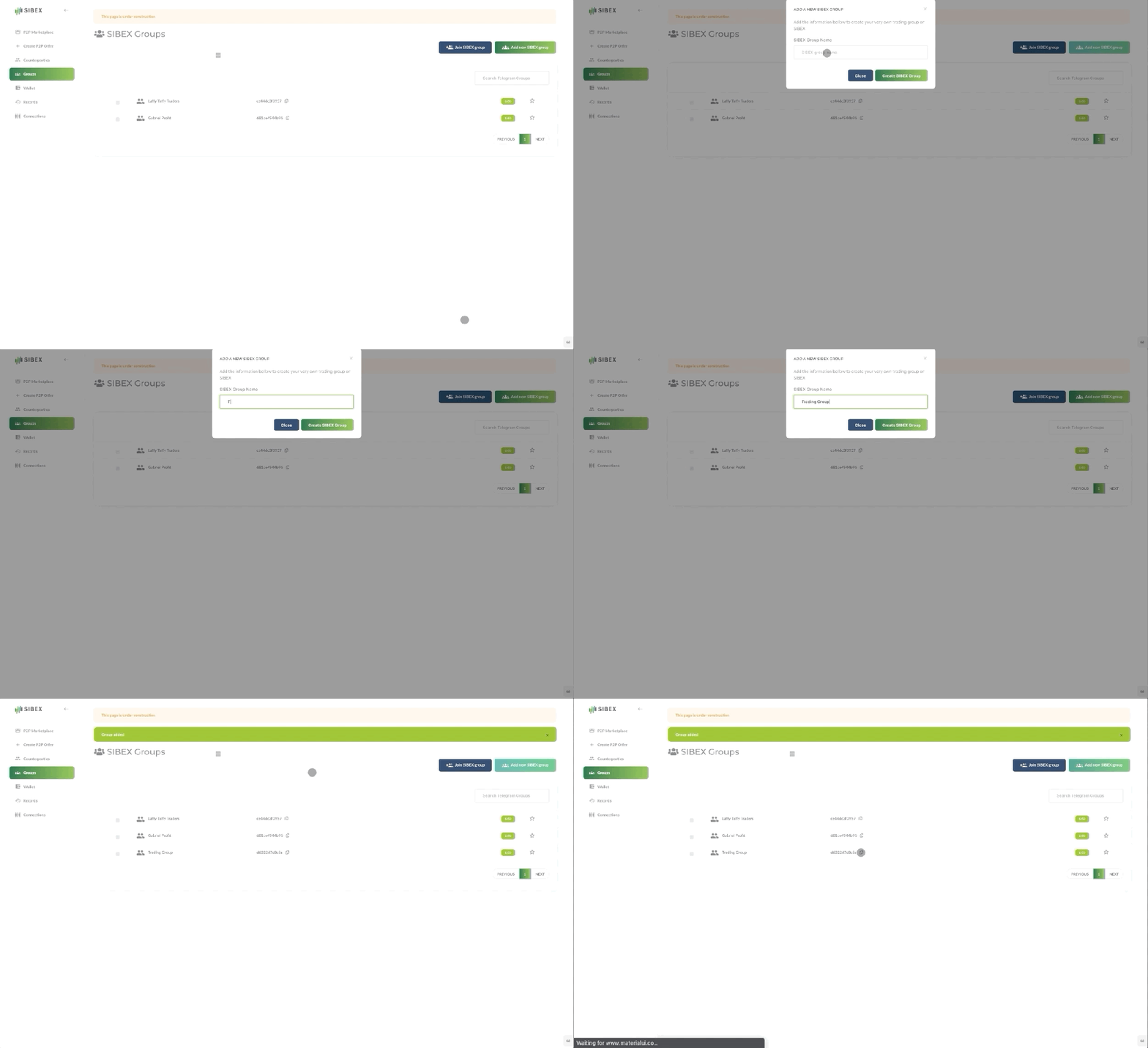
The Group Trading Feature on SIBEX allows anyone to pseudonymously create personal trading groups and manage their own OTC group as an exchange. Users have the option to join an existing group of traders. Alternatively, they can also create a new group and invite up to 50 members, keeping trades safe and decentralized in a close-knit private community.
Whether you are a group manager, a broker, or a seasoned trader, you can easily transition between the SIBEX Platform and private messaging platforms, building markets organically and improving liquidity.
Create your own private trading room.
“Not Your Keys, Not Your Coins” Several centralized exchanges recently faced serious problems — They were hacked, and had suspended withdrawal services, leaving users unable to retrieve their assets.
Such issues will not happen on the SIBEX Platform, as SIBEX removes all intermediaries between traders. Powered by Amazon Web Services (AWS), users can be assured that their personal data and keys are always secured as every SIBEX user has their own personal trading server on AWS. The assets, private keys, information, and the data stored on the users’ AWS trading servers are only available to the user’s sole discretion and guarantees full privacy, security, and the decentralization of trade settlements.
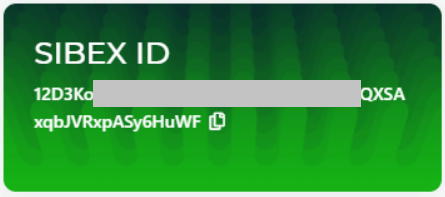
How your wallet works on SIBEX Once you have finished setting up your trading server and logged into otc.sibex.io, your wallet (SIBEX ID) is automatically generated. This non-custodial wallet allows you to store, manage, and to trade your bitcoin and any ERC20 tokens on the SIBEX platform.
This wallet is YOURS. It is your wallet, connected to SIBEX via your personal trading server.
Non-custodial: Only you can access your wallet At SIBEX, we never store your crypto assets, we are only providing you with the software you need to store them yourself on AWS server. Your wallet is unlocked on your server using your password. The password acts as your decryption key to lock and unlock your wallet — without it, you cannot access your wallet. Since we don’t know and don’t store your password, only you can unlock your wallet.
Access your wallet anytime, anywhere We made this happen because your wallet is on the AWS server created by yourself 24/7. Storing your wallet securely on AWS servers ensures that your wallet can be accessed from anytime, anywhere, and from any of your devices.
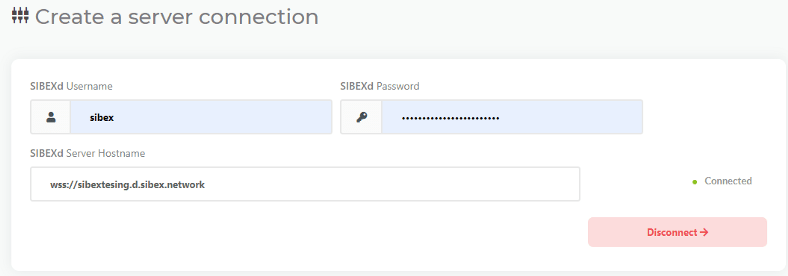
Secure, Private, & Safe When you access your wallet using your SIBEX username, password, and server hostname, your browser uses our API to access your wallet from your own AWS server, which is then securely shown on your device.
Can I recover my wallet? If you have your wallet files, you have your private keys.
Your SIBEX credentials are stored in your own AWS server which we have no control at all (it’s your own server). If you lose your SIBEX credentials, you lose access to your crypto, so take measures (e.g a password manager) to securely store your SIBEX credentials.
“Not your keys, not your bitcoins” is a common understanding of crypto ownership, but in SIBEX we get this to another level: “If it’s not your keys and your own server, it’s not your bitcoin!” Keep full ownership of your crypto assets when trading on SIBEX.
P.S. If you are tech-savvy and don’t want to set up your AWS server, alternatively you can create your own server on your own hardware.
That’s it for today. Follow us for more updates, and join our Telegram group for SIBEX Announcements — http://t.me/sibexltd
In the previous article SIBEX For Beginners A-Z, we provided a step-by-step guide to setting up a personal AWS server for trading on SIBEX. Some of you may wonder, why run your own personal server on AWS cloud? That’s a great question. You ask, we answer.
Decentralized: Be your own exchange. Here at SIBEX, we believe in decentralization. Over the years, digital assets worth over hundreds of millions of dollars have been drained from centralized exchanges from major hacks and security breaches. By running your own personal trading server, your personal data and keys are always secured and private.
Not only do centralized exchanges run the risk of being hacked, they also crash during peak times. When a client-server (centralized exchange) system is built, how quickly you can service an increased load on the system (scalability) is an important consideration. The number of users expected to be active at a given time dictates the number of servers that are operated. From the standpoint of centralized exchanges, energy and money is wasted from buying too many servers and having them remain dormant and unused. When the peak load goes beyond what is planned, the centralized service simply stops working. This will not happen on SIBEX. With SIBEX’s decentralized technology, you can trade anytime and anywhere while keeping full control of your assets.
Exchange, Everything. Decentralized. As every SIBEX user operates their own server, scalability is a perfect 1:1 user-to-server ratio. There are no middlemen between your P2P trades, the principal-agent problem has thus been removed entirely.
Connecting to a private trading server is very straightforward — you can read our setup instructions, or follow simple steps from a short walkthrough video.
Users who are new to the SIBEX Platform can set up their own private trading server with just a few clicks. After a short 15-minute wait for the installation process to complete, go to https://otc.sibex.io, connect to your private trading server, and you can start trading on the SIBEX Platform.
Why AWS? AWS meets the highest standards for privacy and data security. Using AWS, you will gain the control and confidence you need to run your trading server with the most secure cloud computing environment available today. All data flowing across the AWS global network is automatically encrypted at the physical layer before it leaves the AWS secured facilities.
Thanks to a close working relationship with AWS Cloud Computing Services, the default recommended approach is to set up a server with AWS. Alternatively, you may also set up your server on any cloud or on your own hardware. If you wish to set up a physical personal server at home, our personal server documentation is here for you.
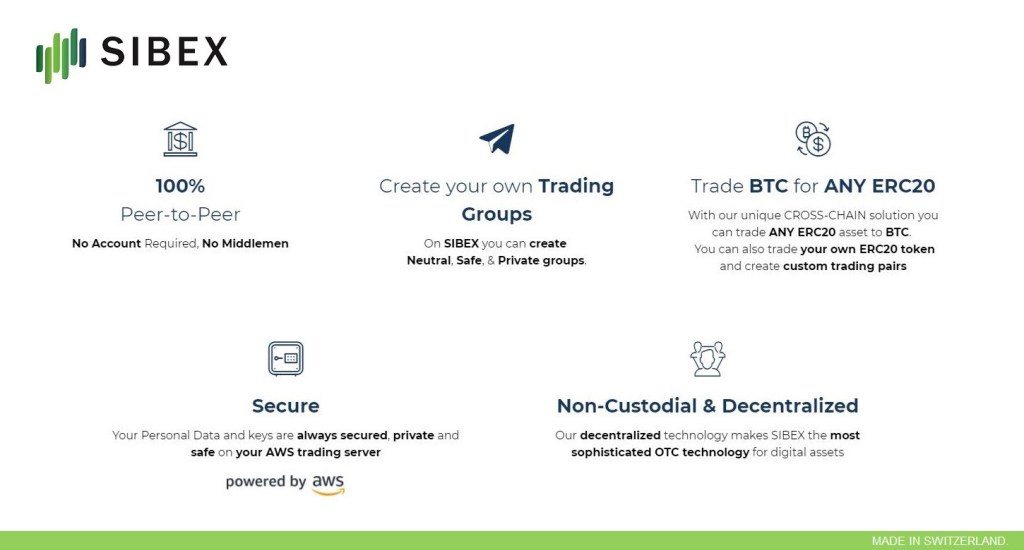
SIBEX is a Swiss decentralized protocol that allows you to trade OTC securely & privately and directly between Bitcoin and any ERC20 Tokens you wish using smart contracts.
No Need to Create an Account! No Middleman! Global Liquidity!
How to trade on SIBEX?
Don’t worry, trading on SIBEX is very easy, it only takes a few minutes to get started!
1. Set up AWS trading server
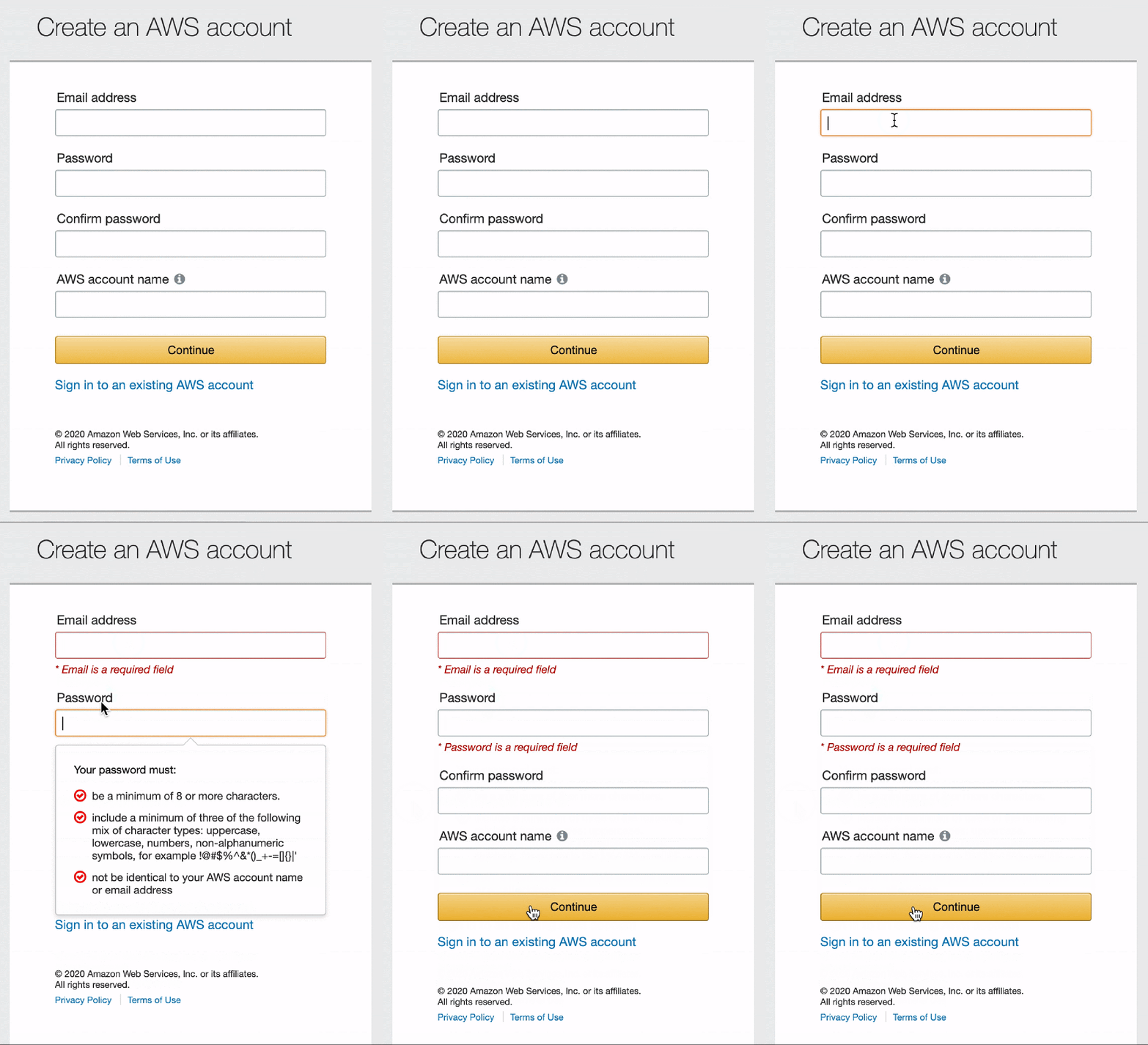
First of all, you need to create an AWS account. This will serve as your unique server to trade on SIBEX. After the account is created, sign in as “Root User” to give you full control of your account.
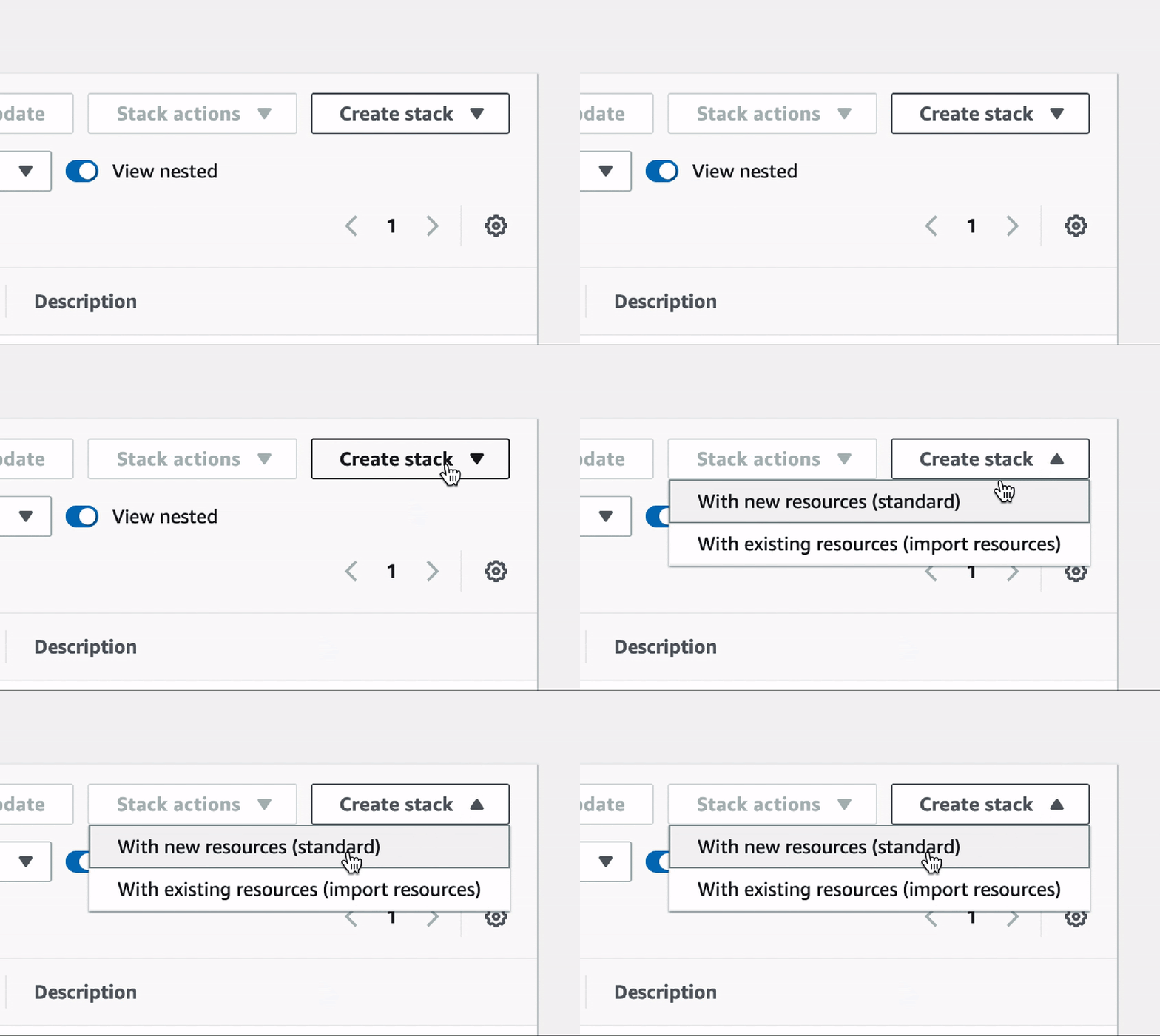
After that, you just need to keep hitting “Next” to complete all the following steps. Easy right? Now you will see the “Output” button, click on it and copy your “Public IP” address.
Would you like to trade with someone privately? Maybe you met them in a chat group, or on an internet forum. You don’t need to trust them anymore when you trade using SIBEX. You only need their SIBEX ID.
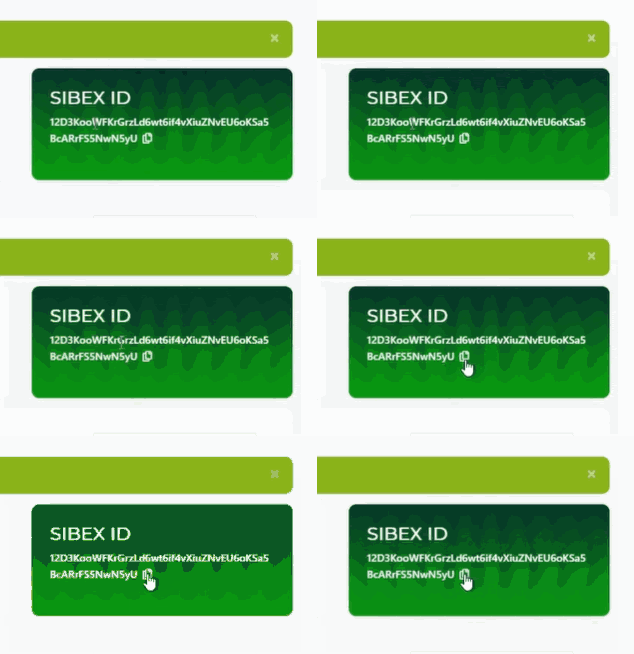
Go to “Wallet” and copy your SIBEX ID, and give it to your counterparty
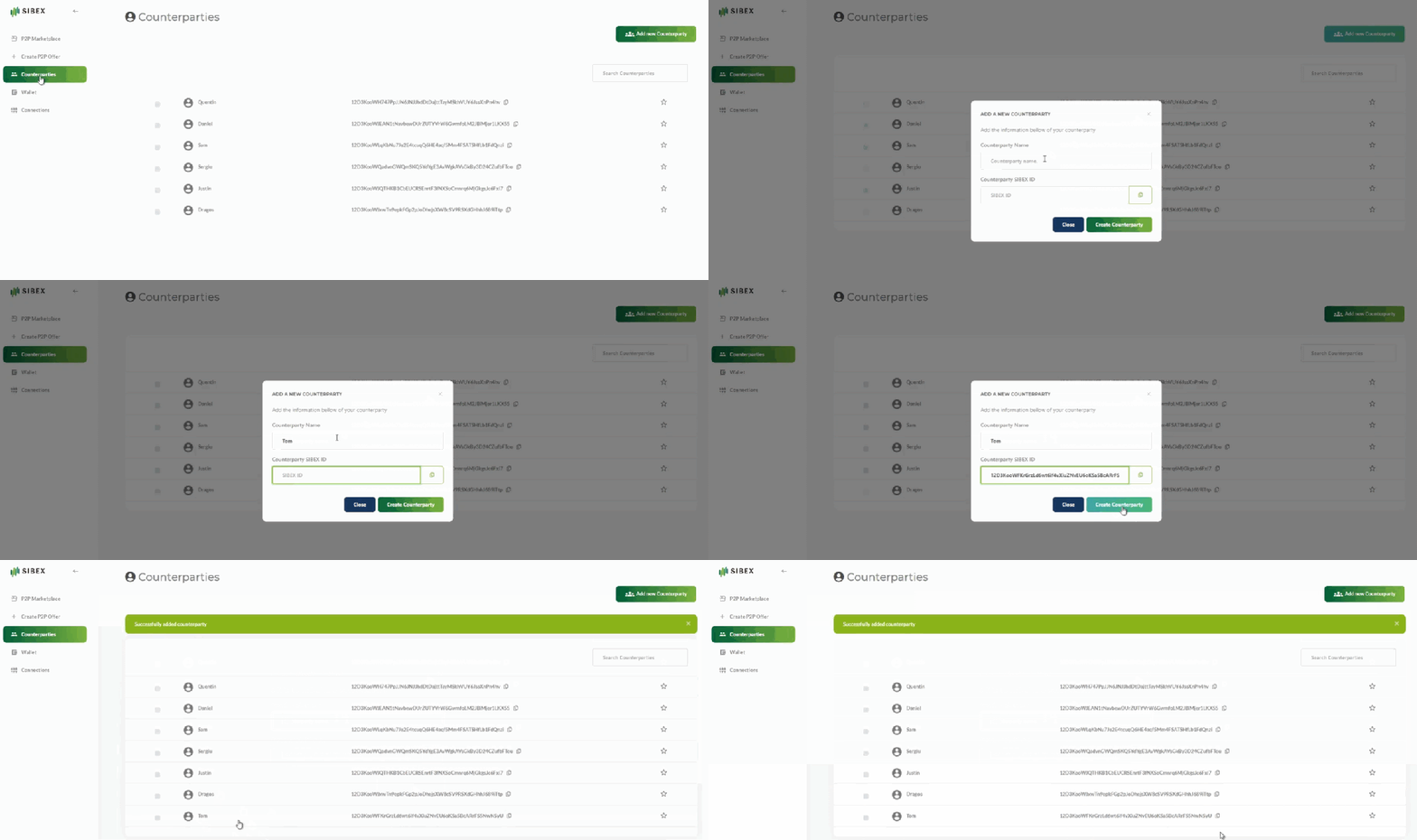
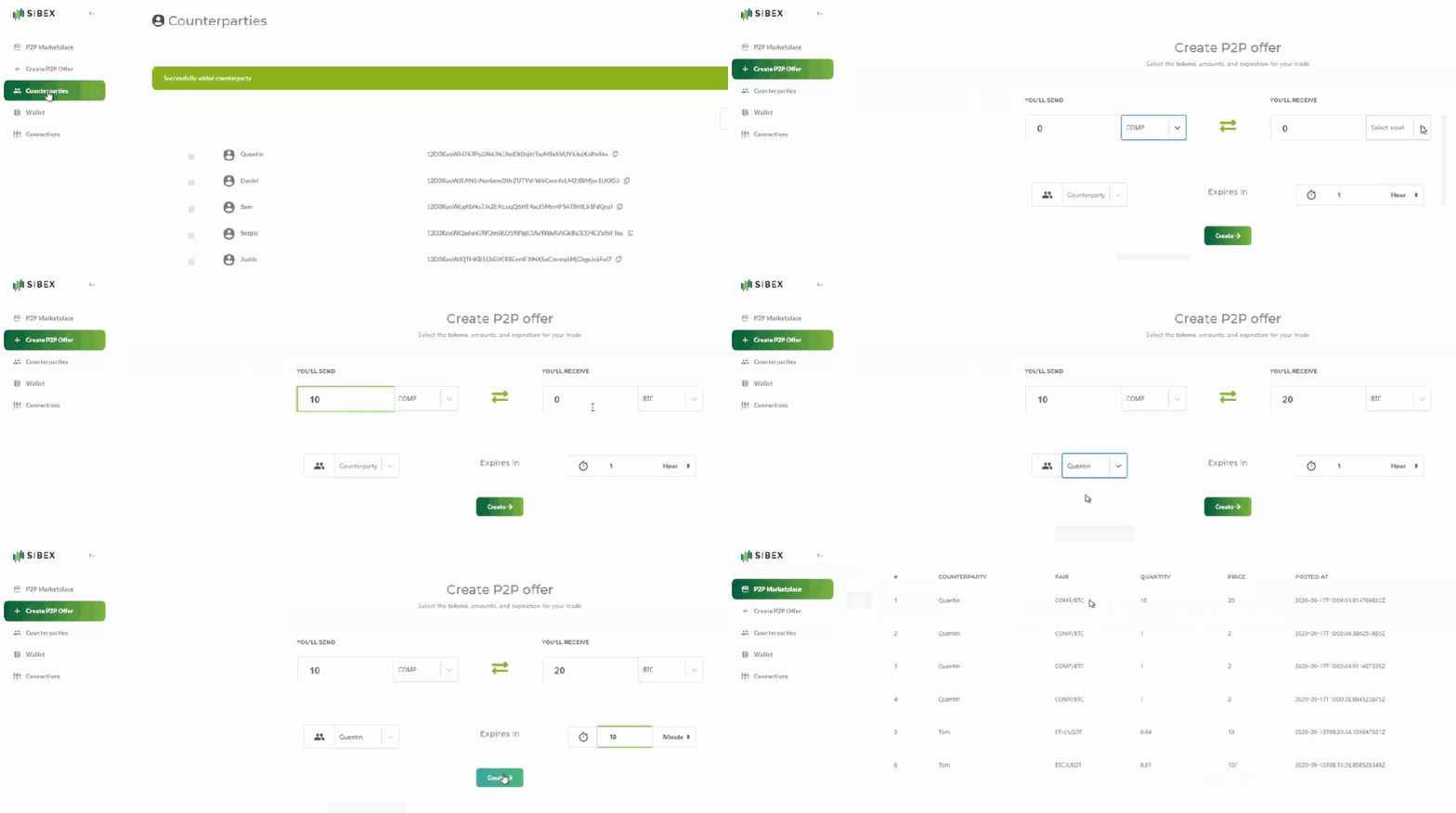
3. Click “Counterparties” and add the SIBEX ID of the person you are trading with.
4. Click on “Create P2P Marketplace Offer”
5. Select the counterparty, and specify the terms of the trade.
When you click “Send Offer”, the offer will appear to your counterparty in the “P2P Marketplace”. When your counterparty agrees to take the offer, your exchange will begin immediately and both parties will be settled at the same conditions on-chain.












 Geoffrey Cheng