The keynote address is titled “The Future of Bitcoin – Institutionalization as a Global Macroeconomic Asset” – WATCH HERE
In the realm of global finance, few assets have captured the world’s attention quite like Bitcoin. Initially met with scepticism, it has evolved from a fringe concept into a top 10 global asset by market cap.
On March 26-27, join me at AsiaWorld-Expo as we explore Bitcoin’s potential as an institutional-grade global asset.
Use the promo code WOWHK24SPEAKER to access a 20% discount on your ticket. See you there at WOW Summit!
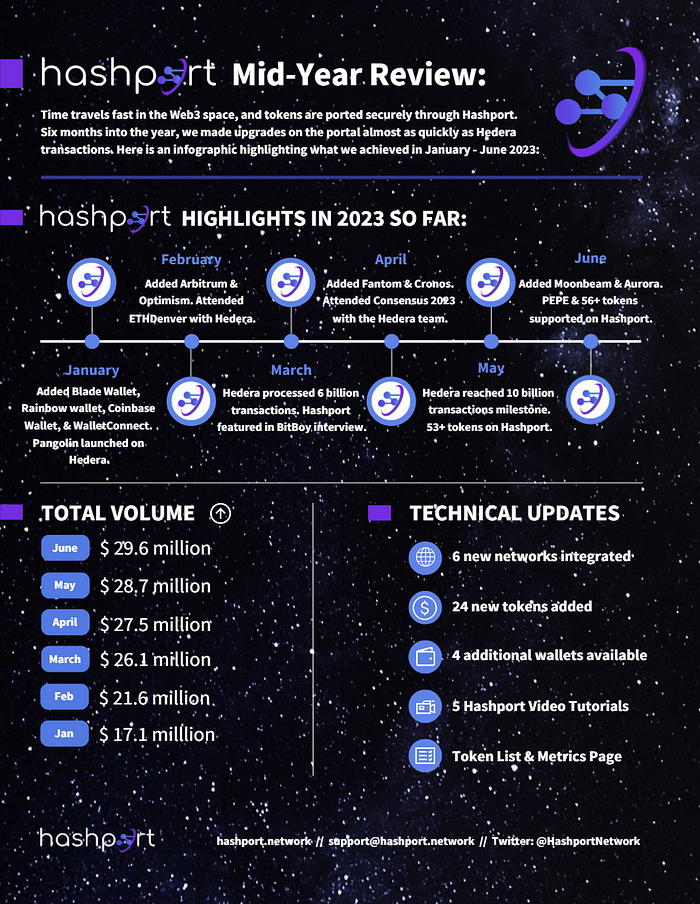
Time travels fast in the Web3 space, and tokens are ported securely through the Hashport bridge. Six months into the year 2023, we made upgrades on the portal almost as quickly as Hedera transactions.
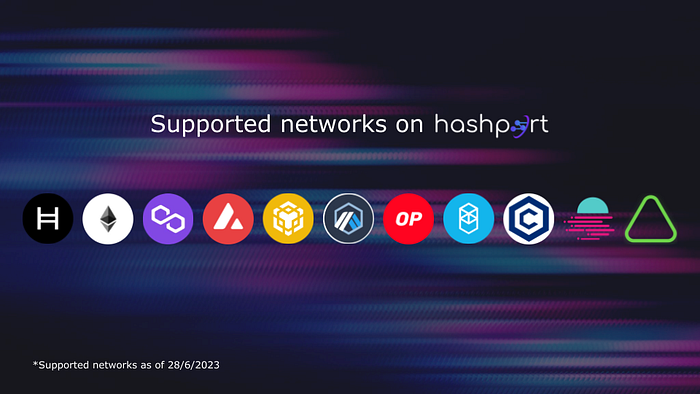
As a public utility and interoperability solution, Hashport serves the Hedera ecosystem and the broader DeFi communities. At the time of writing in July 2023, Hashport supports 11 networks and 57+ tokens. We have many milestones and features to highlight — let’s review what we achieved so far this year.
Supported networks
In the previous 6 months, Hashport integrated an additional six networks, enabling interoperability between the existing supported networks with layer 2 networks Arbitrum and Optimism, Fantom, Cronos, Moonbeam, and Aurora.
All network integrations were voted in by the Hashport Governing Council, and many of them were requested by Hashporters and DeFi players who wished to enter the Hedera ecosystem.
Supported tokens
Along with the addition of the 6 new networks, 24 more tokens were integrated with the portal. Here are the new integrated tokens categorised by networks:
Currently, Hashport supports 57 unique tokens and their cross-network representative tokens. Users can access the Hashport Token List to seamlessly search for any token supported on the portal.
Top Ported Tokens
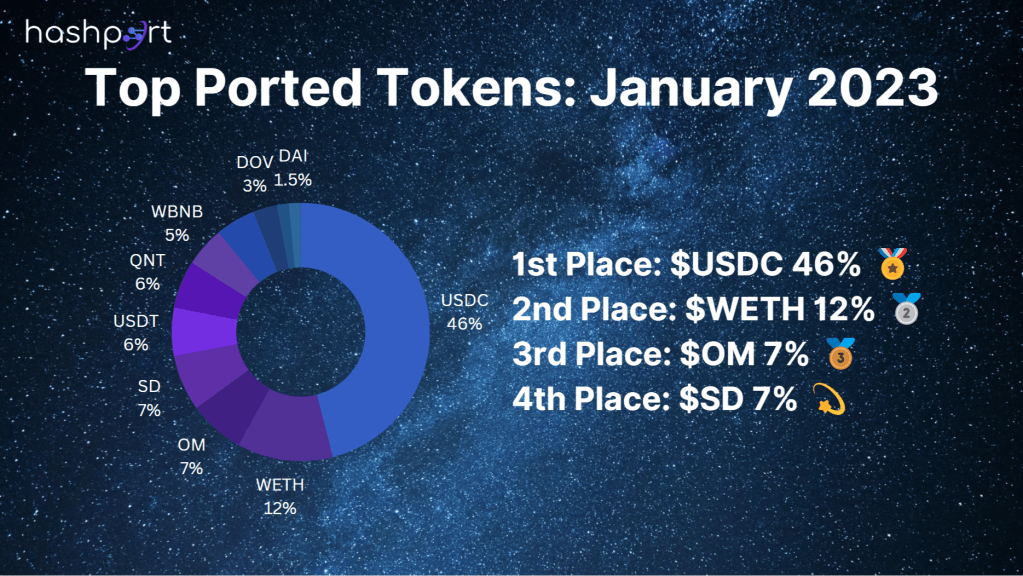
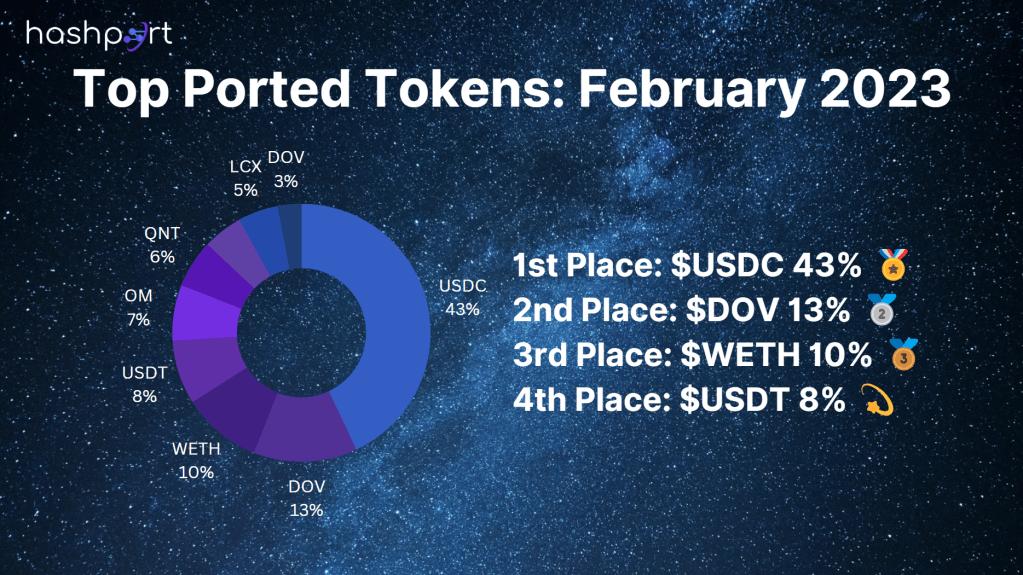
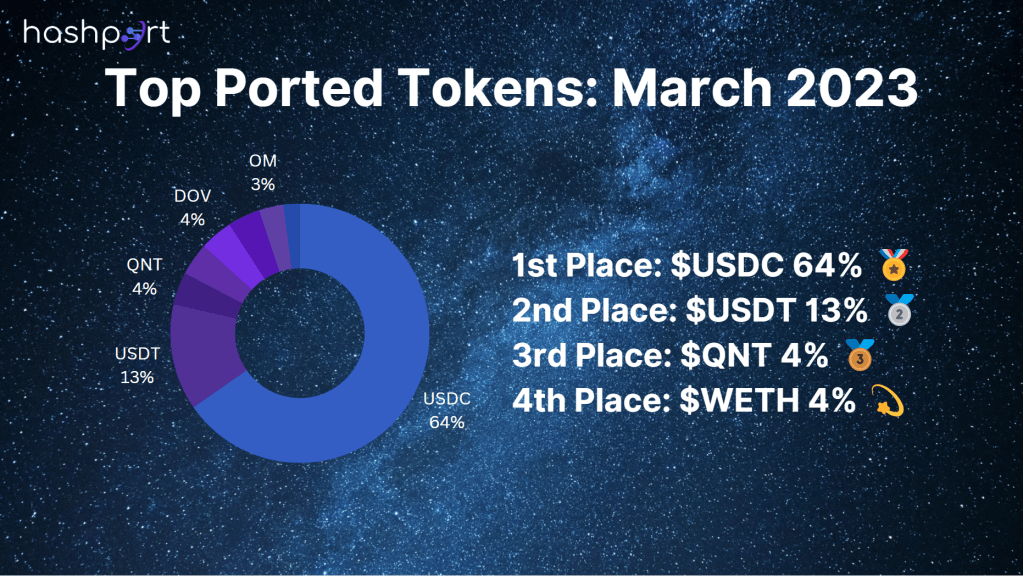
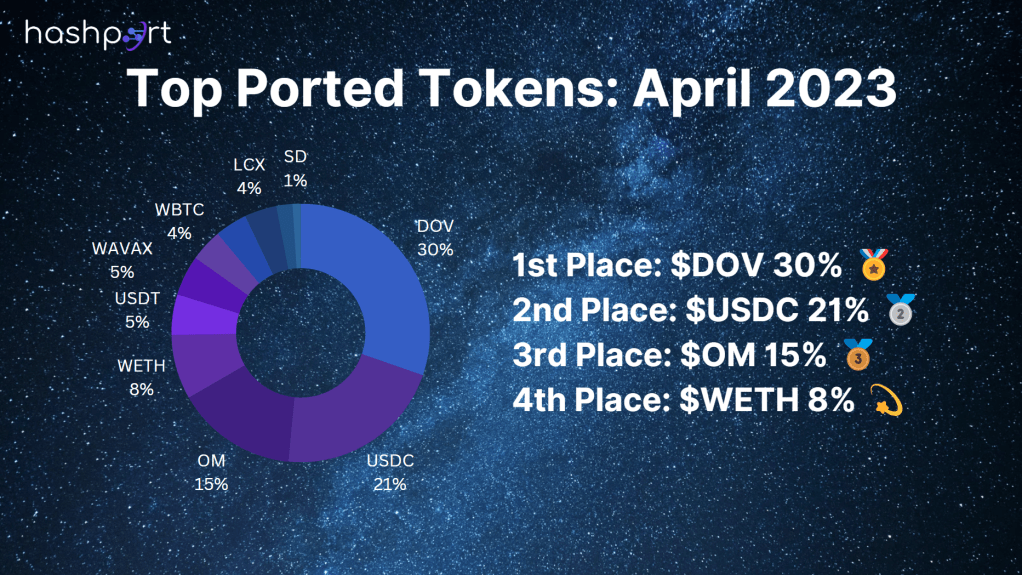
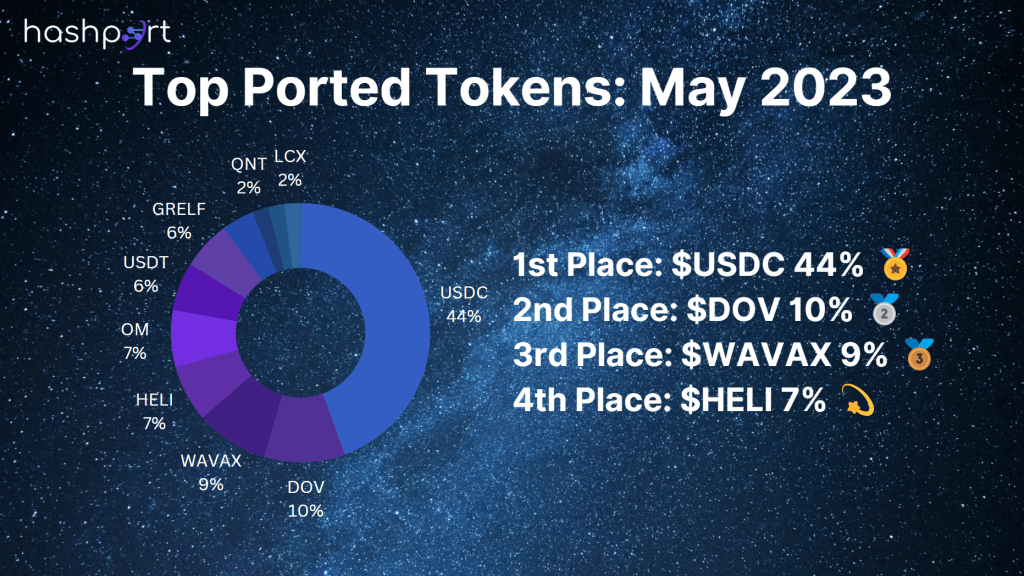
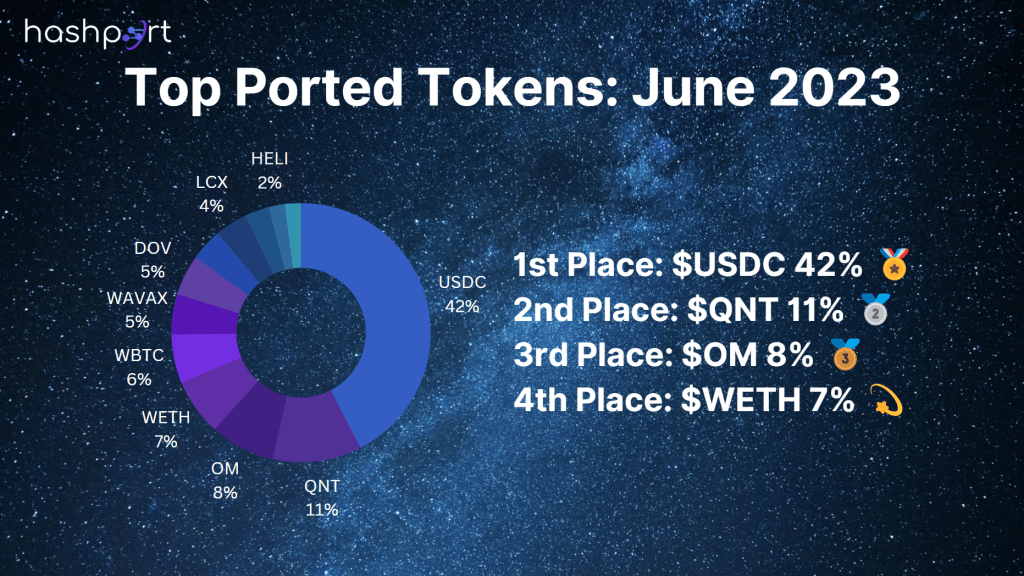
Every Monday, we share a weekly review of Top Ported Tokens to provide a glimpse into which tokens have been popular. For the first time ever, we give Hashporters a sneak peek into the monthly Top Ported Tokens of January — June 2023.
Other than the expected result of stablecoin $USDC being the top ported token, Wrapped ETH, Dovu’s $DOV, MANTRA’s $OM, Quant Network’s $QNT all had moments in the top 3. Tokens such as Wrapped AVAX, $HELI, & $USDT also gained popularity in the past six months.
On the EVM side, we integrated RainbowKit, a React-based library for adding Web3 wallets into dApps. It allows users to connect wallets such as Rainbow, CoinbaseWallet, and WalletConnect. Users can simply scan a QR code on their mobile phone to access Hashport through their favourite wallet.
To learn more about connecting EVM wallets & Hedera accounts to Hashport, watch our video tutorial.
Hashport Tutorial Series
The world of DeFi is constantly changing, and education is crucial for users who are new to Hashport and the Hedera network. We understand that some users prefer watching visual content more than reading blogs, so we published five new video tutorials.
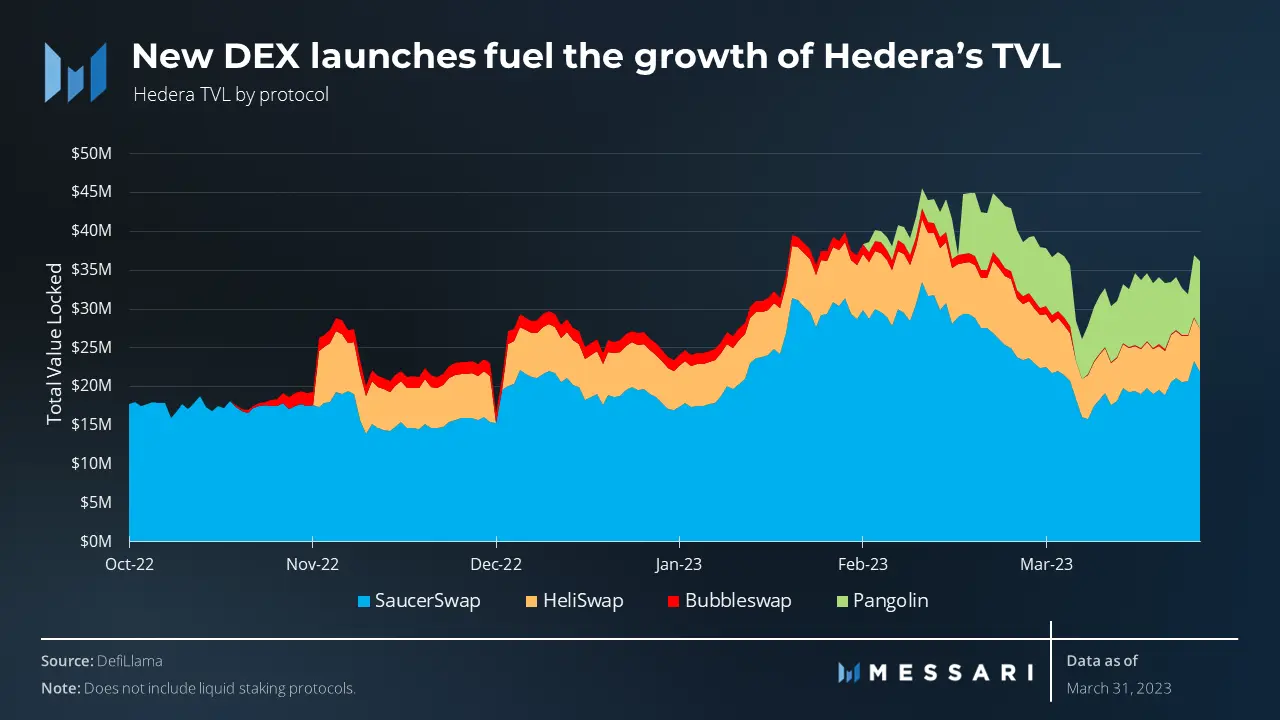
According to Messari’s State of Hedera Q1 2023 report, “all Hedera Network Services saw key metrics rise”. At the time of writing, the Hedera mainnet has processed 10.3 billion transactions since January 2023. Hedera network TVL increased 52% QoQ, and its growth can be attributed to DeFi opportunities that appear on DEXes such as SaucerSwap, HeliSwap, and Bubbleswap.
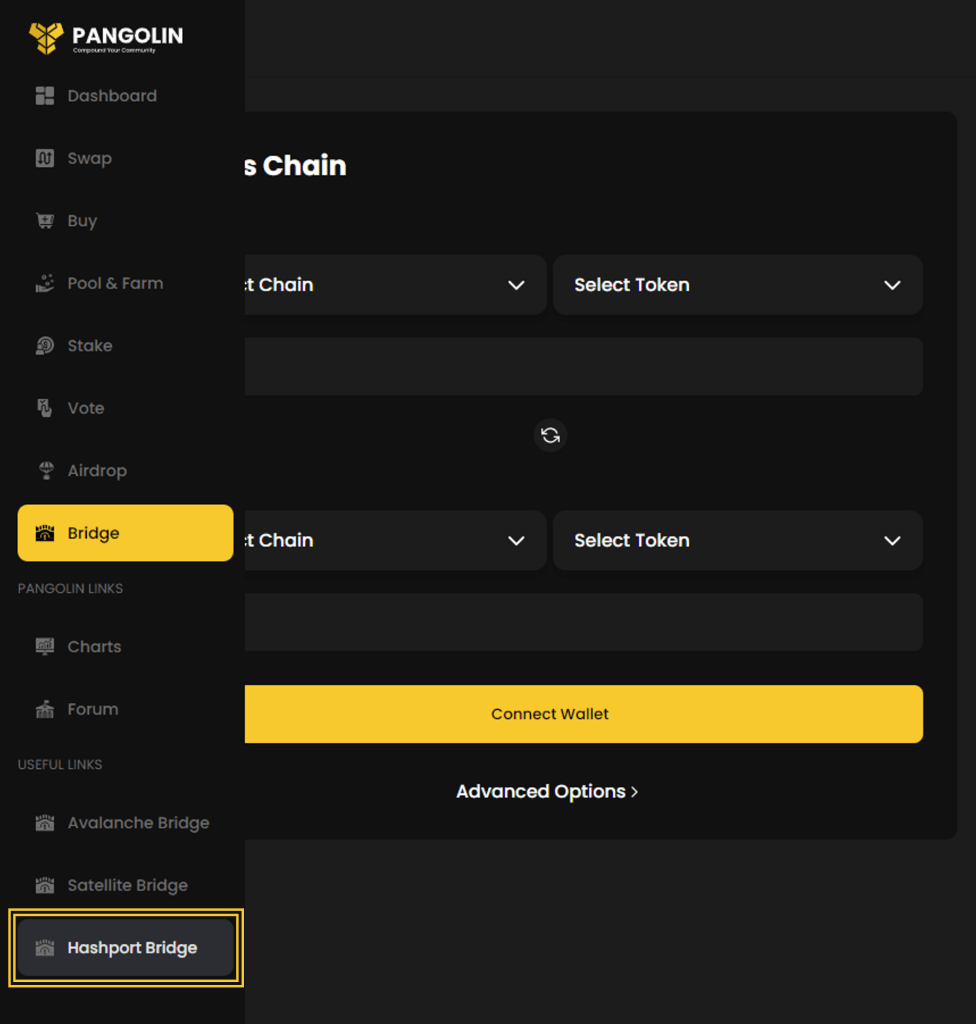
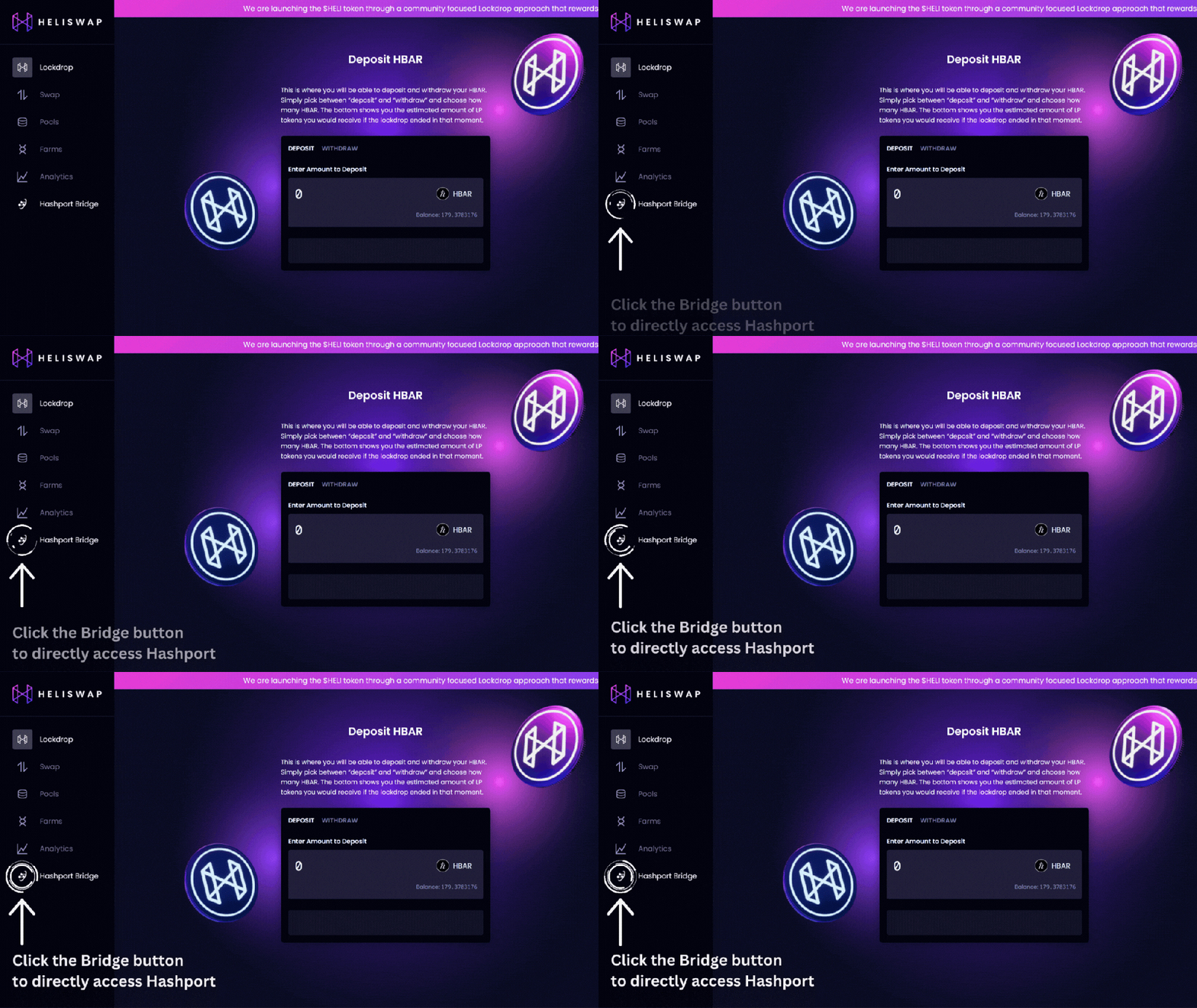
For a seamless user experience, a “Hashport bridge” button is available on these platforms to facilitate a smooth token porting journey.
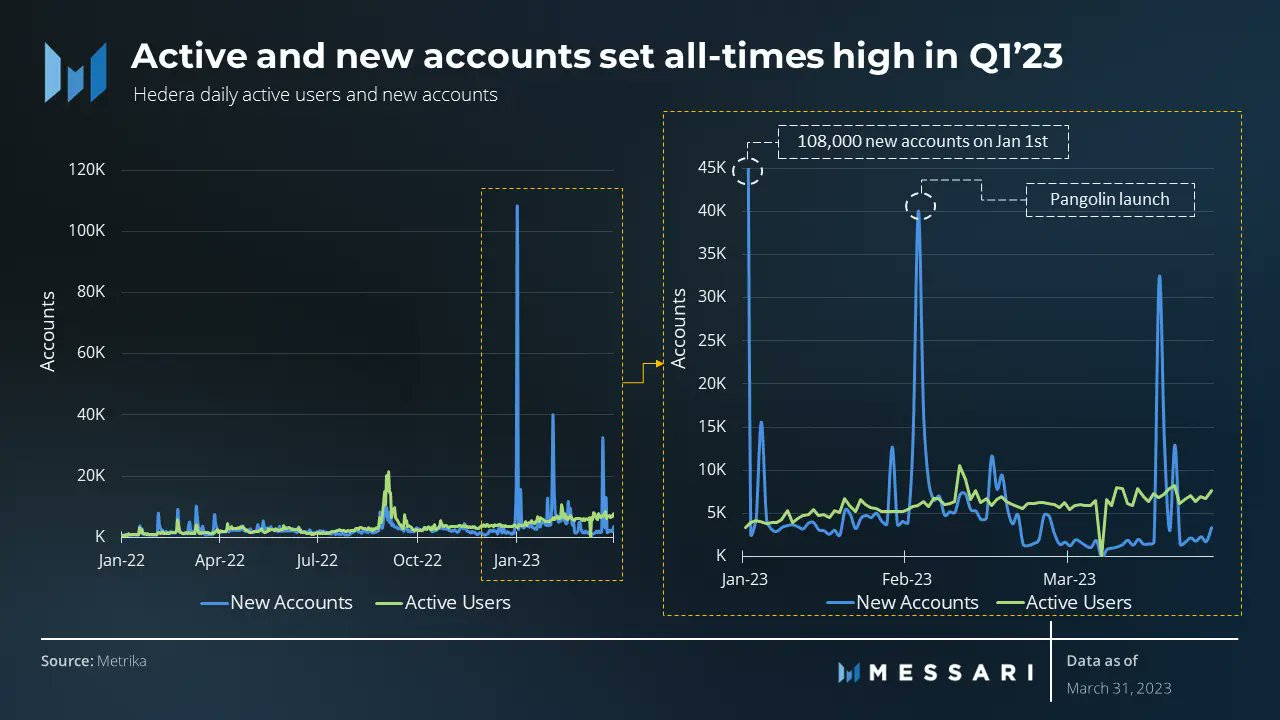
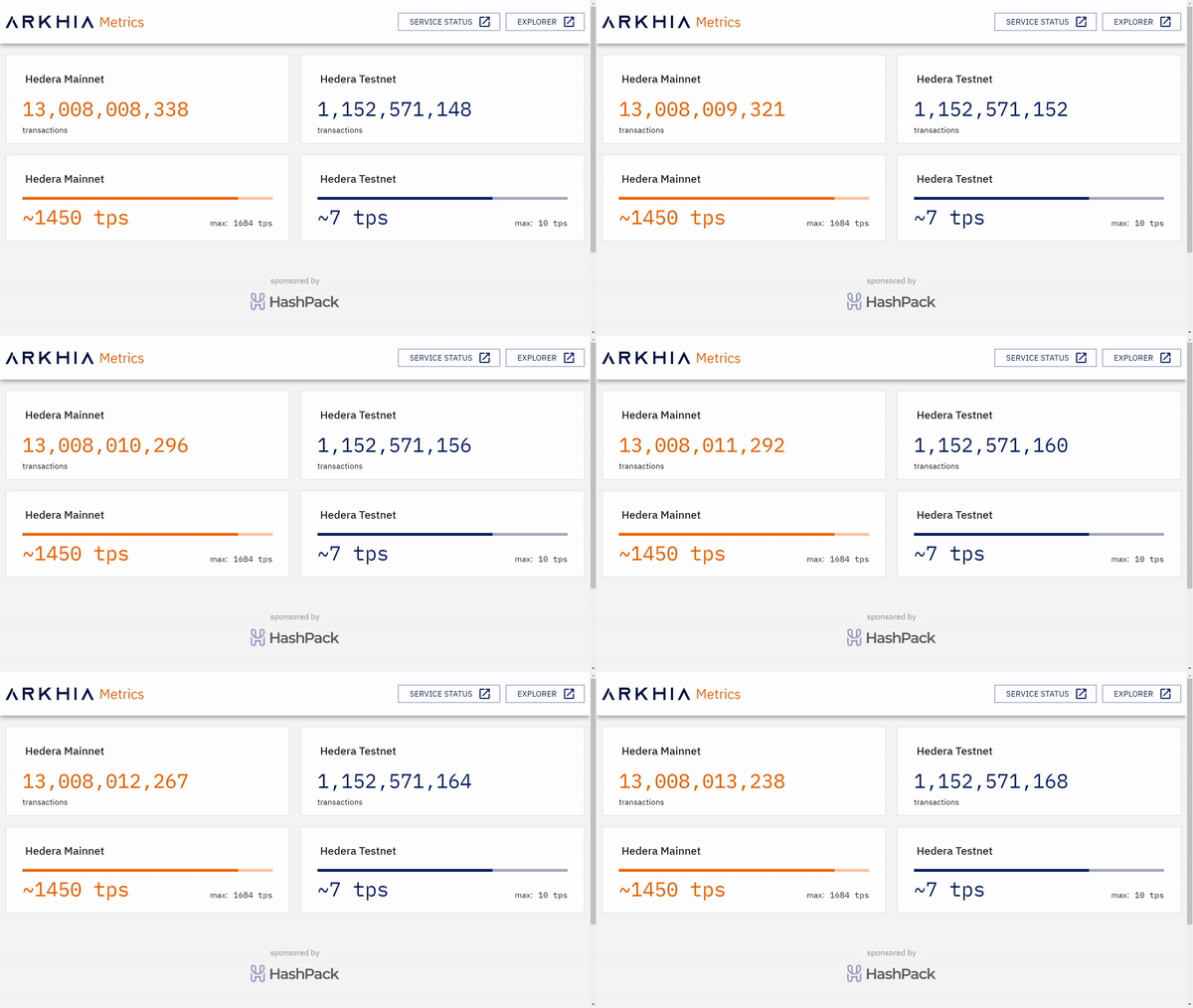
As shown in Metrika’s Hedera network overview, more than 1.5 million Hedera accounts were created in the previous six months. The Arkhia metrics page that launched in Q2 2023 has also been a popular method to view real-time Hedera transactions and TPS.
Metrics page
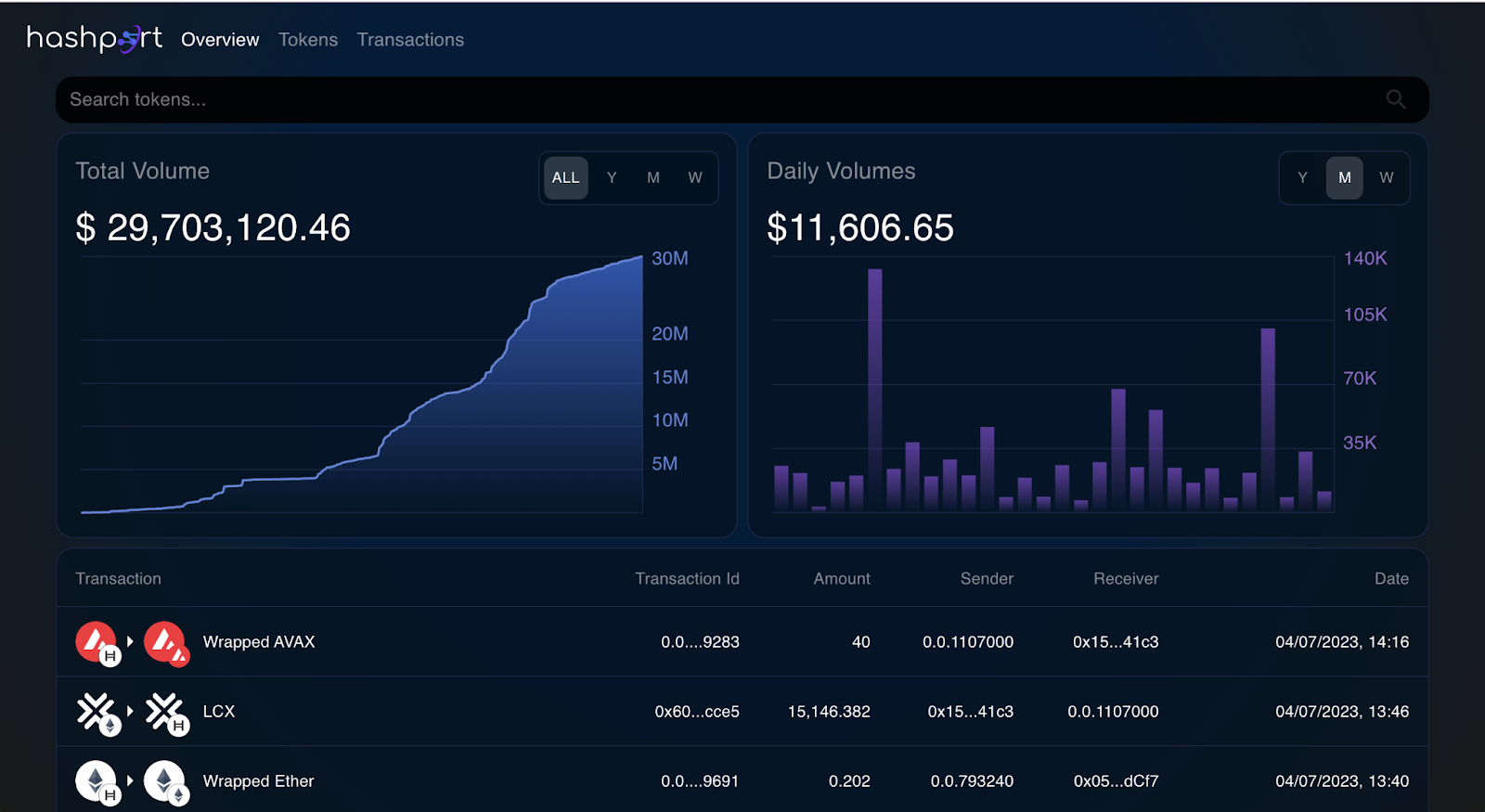
In Q2 2023, we made the Hashport metrics page available to the public. Users can access data on supported tokens, volume & liquidity. Upgraded features also allow users to browse transactions by categories such as sender, date range, token address, & transaction hash.
A video tutorial is available on YouTube for new users who wish to learn how to efficiently browse data on the metrics page.
Hashport’s Total Volume grew from $14 million to $29.6 million in six months.
Features & Mentions
One of the high-profile interviews for Hashport that took place in the past six months was our interview with BitBoy, in which our Director of Business Development Jesse Whiteside was invited as a special guest. Viewers can jump to the 1:03:45 mark for our feature interview!
What an eventful six months! We will keep BUIDLing and pushing boundaries in 2023 & in 2024.
About hashport hashport is the enterprise-grade public utility that facilitates the movement of digital assets between distributed networks, extending their functionality in a quick, secure, and cost-effective way. In order to remain platform-neutral, hashport functions without the use of a proprietary token. The network is built on a robust and performant architecture, secured and operated by a group of industry-leading validator partners from around the world. hashport has passed rigoroussecurityaudits and follows industry best practices; regularly performing comprehensive network tests to ensure the integrity of the network.
Disclaimer: The information provided on hashport’s website does not constitute investment advice, financial advice, trading advice, or any other sort of advice. You should not treat any site content as advice.
Hashport is an interoperability solution that facilitates the movement of supported digital assets across supported networks — Hedera Hashgraph, Ethereum, Polygon, Avalanche, & BNB Chain — and 34 supported tokens as of December 2022.
Using the API functionality, developers can integrate Hashport’s interoperability solution into dApps and enable users to enjoy the token porting experience.
If you want to learn more about the Hashport API from the beginning, learn more by reading our introductory blog. For more details, you can dive right into docs.hashport.network for the full documentation.
In this article, we will discuss how to use the Hashport API and enable users to port their assets across networks.
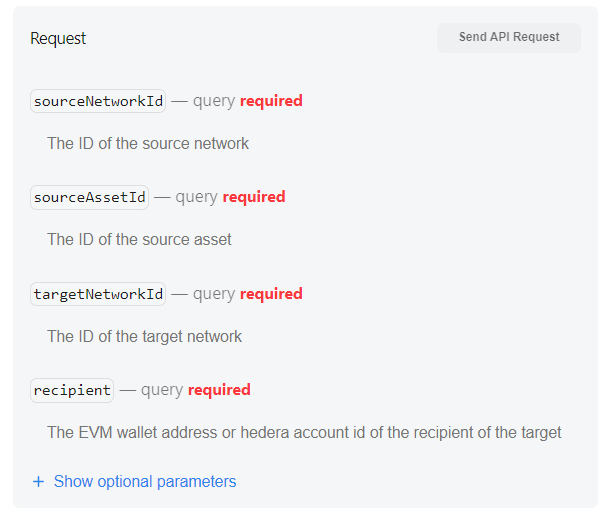
Now that you have retrieved network IDs and asset IDs, you can visit the subpage titled Validate Porting Steps to submit the required parameters at the endpoint to ensure that all the necessary information captured by your dApp is set before starting the porting steps.
This is a step that you should do before starting the Porting Steps.
Porting Steps
Porting steps represent the order of operations that dApps must conduct with the user to successfully port an asset across the hashport ecosystem.
dApps should ensure that the user has sufficient tokens to:
Submit transactions ( gas fee, network fee & no. of tokens to be ported)
Associate tokens on Hedera network
It is also imperative that dApps should only allow the user to move to the next step when the previous action is successful. If the previous action is not successful, the step should be repeated. Users should also be allowed to exit and ask for technical assistance.
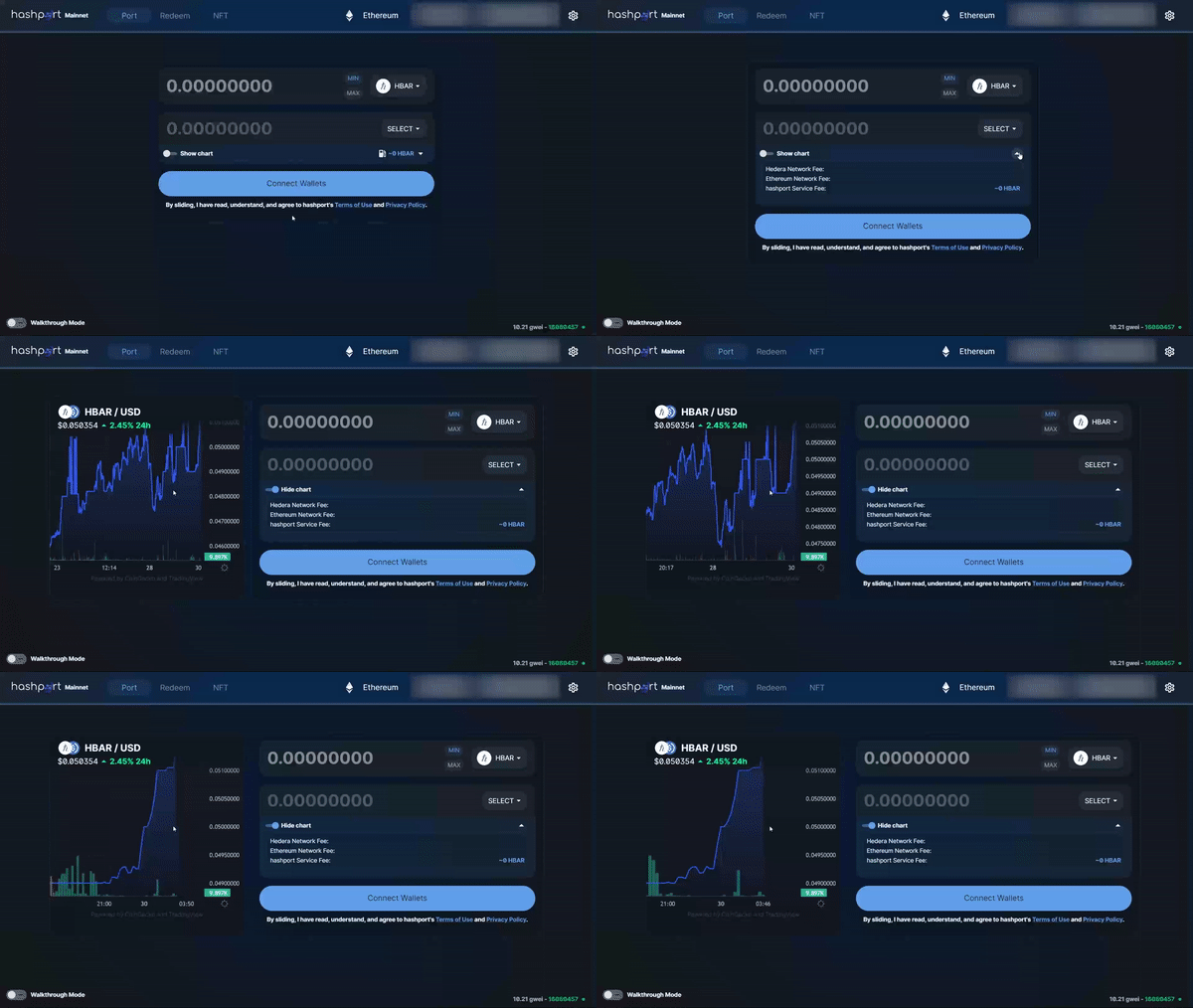
The Hashport app will attempt to auto-associate if the user’s Account ID has not yet associated the token. In order to make the token porting experience as seamless as possible, the updated user interface also provides a token price chart and a breakdown of gas and network fees that are associated with the token porting.
Now that we have completed our initial transaction, we can check the transfer status on the Hashport validator swarm.
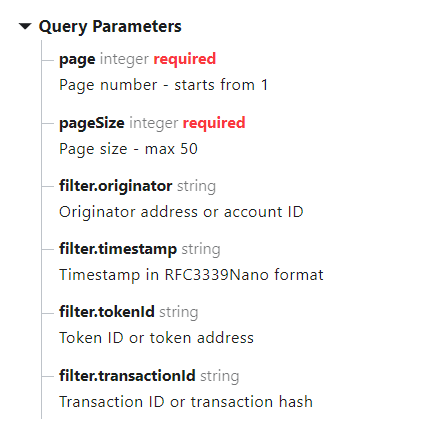
Gets transfers (paginated)
At this step, users can retrieve a paginated list of transactions that are completed on Hashport. Users can find transactions and view the details of each transaction.
By providing a filter.transactionId query parameter, users can check if a new transaction has been verified by the validator swarm.
Convert a Hedera Transaction ID to Hashport’s Transaction ID
At Convert Hedera txID, you will find the endpoint where you can send an API request and it will return a string that is formatted and safe to use in other endpoints.
After users have successfully transferred their asset to Hashport, dApps will need to poll the transaction to check if it has been validated by the hashport validator swarm. To avoid any unsafe symbols and characters within the transaction ID. dApps might want to retrieve a safely constructed transaction ID to pass into the GET /transfers/{txId} query.
Thank you for completing the Hashport API Series. To review past blogs, you can visit by clicking the links below:
About hashport hashport is the enterprise-grade public utility that facilitates the movement of digital assets between distributed networks, extending their functionality in a quick, secure, and cost-effective way. In order to remain platform-neutral, hashport functions without the use of a proprietary token. The network is built on a robust and performant architecture, secured and operated by a group of industry-leading validator partners from around the world. hashport has passed a rigoroussecurity audit and follows industry best practices; regularly performing comprehensive network tests to ensure the integrity of the network.
Disclaimer: The information provided on hashport’s website does not constitute investment advice, financial advice, trading advice, or any other sort of advice. You should not treat any site content as advice.








 Geoffrey Cheng